When Quiet Becomes Hollow: The Unexpected Emotional Cost of Acoustically Bare Luxury Interiors
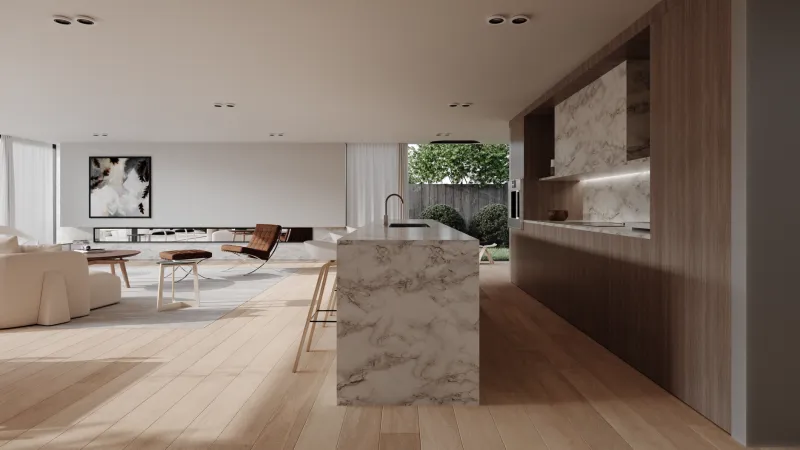
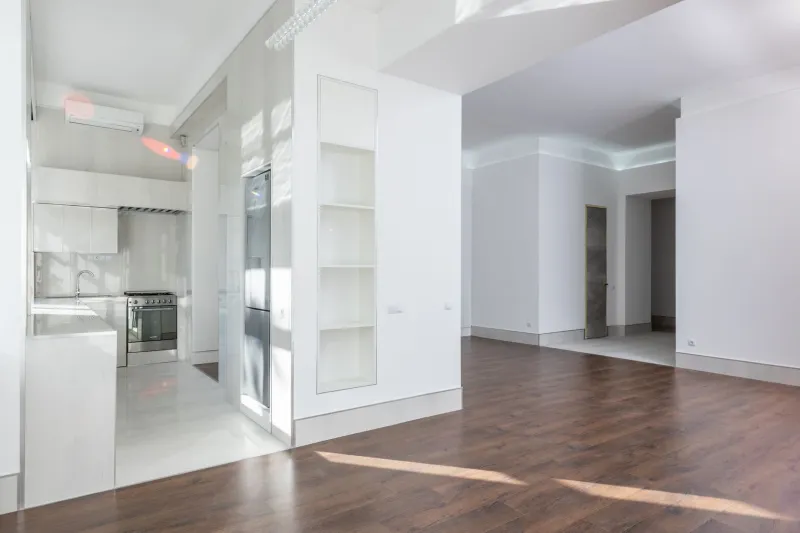
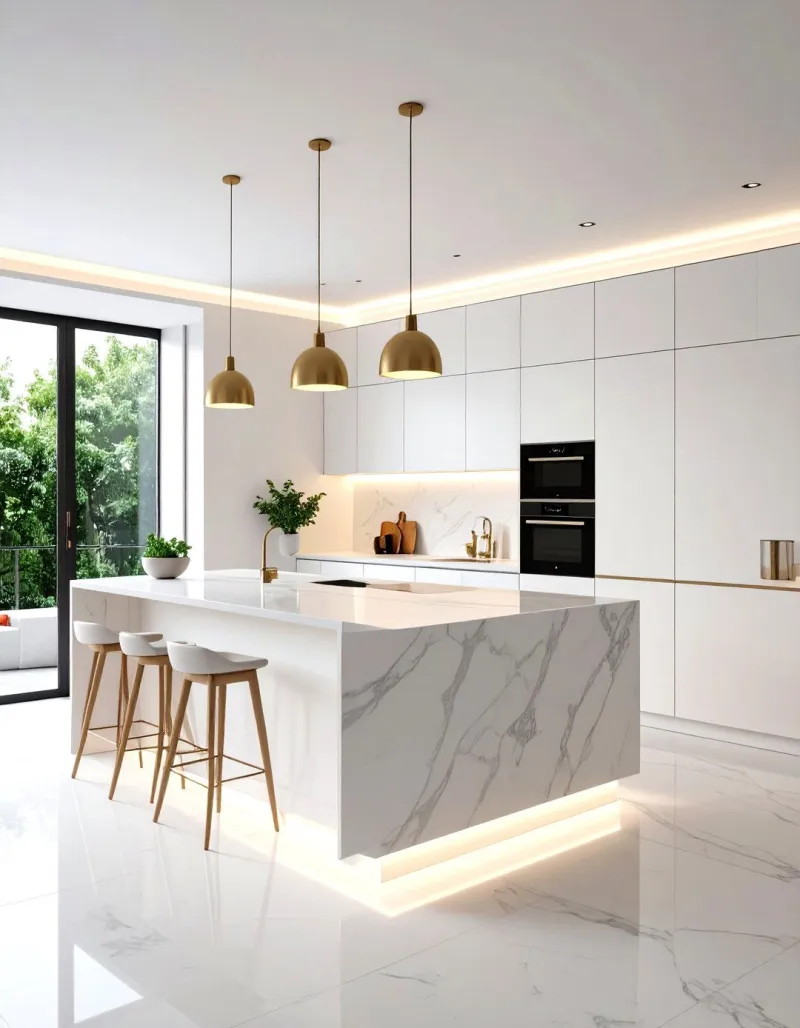
There is a particular kind of silence that settles into a certain type of home — not the gentle, enveloping quiet of a mountain retreat or a well-appointed library, but something harder, more clinical. It is the silence of polished concrete floors, floor-to-ceiling glass, and walls uninterrupted by art, textile, or texture. It is, paradoxically, one of the loudest silences a person can inhabit.
As minimalist luxury continues to dominate the aspirational design conversation across American cities and coastal enclaves, a quieter reckoning is emerging among the very homeowners who invested most deeply in its promise. The aesthetic delivers on its visual terms with remarkable consistency — clean sightlines, uncluttered surfaces, the meditative geometry of a space reduced to its essential form. What it does not always deliver is the psychological ease its imagery implies.
The Acoustic Reality Behind the Aesthetic
Minimalist interiors, by their very nature, remove the elements that have traditionally served as acoustic buffers in residential spaces. Rugs, drapery, upholstered furniture, bookshelves lined with volumes, wall coverings with depth and pile — each of these absorbs sound, diffuses echo, and contributes to what acousticians call a room's reverberation time. Strip them away, and the sonic character of a space transforms entirely.
Hard surfaces — stone, glass, polished wood, exposed concrete — reflect sound rather than absorbing it. In a sparsely furnished room, even minor ambient sounds become disproportionately present. The refrigerator's hum travels farther. Footsteps acquire a hollow resonance. The creak of a chair becomes an event. And in the absence of competing sound — no soft furnishings to dampen, no layered textures to scatter — these sounds do not disappear into the room. They announce themselves.
For some residents, this acoustic starkness initially reads as peaceful. The absence of noise feels like the presence of calm. But environmental psychologists have long noted that what the human nervous system registers as soothing is not silence itself, but rather a specific quality of sound: low reverberation, diffuse ambient noise, the soft irregularity of natural acoustic environments. A room that amplifies every small sound while offering no warm, enveloping sonic texture can register subconsciously as barren — and barren spaces, research consistently suggests, do not support psychological wellbeing over time.
Solitude Versus Isolation: A Distinction the Design World Has Underserved
The minimalist aesthetic has long drawn its emotional authority from the concept of solitude — the deliberate, self-possessed experience of being alone with one's thoughts in a space that demands nothing. It is a compelling proposition, particularly for high-achieving individuals whose professional lives are saturated with stimulus, obligation, and noise.
But solitude and isolation are not the same condition, even when they occur in identical physical circumstances. Solitude is a chosen state, enriched by a sense of ambient connection to the living world — the rustle of wind through trees audible through an open window, the muffled texture of a city beyond glass, the warmth of a material environment that signals human habitation. Isolation, by contrast, is characterized by a felt absence: of warmth, of resonance, of the sensory cues that remind the nervous system it exists within a larger, inhabited world.
Minimalist interiors, when executed without acoustic consideration, can tip a space from the former into the latter without any visible change. The room looks identical. The experience shifts profoundly.
Across the United States, interior designers working with high-net-worth clients in markets from Manhattan's Upper West Side to Malibu's coastline are reporting a notable pattern: clients who commissioned or purchased deeply minimalist homes are, within eighteen months to three years of occupancy, quietly requesting modifications. Not structural renovations, but the careful reintroduction of softness — a large-format wool rug, heavier window treatments, an upholstered panel wall, a curated arrangement of objects that introduces acoustic irregularity without compromising the visual discipline that originally defined the space.
The Sensory Architecture of Connection
What these modifications share is not merely aesthetic — they are, functionally, acoustic interventions. And their psychological effect is difficult to overstate. Sound absorption does not simply reduce noise; it transforms the perceived character of a space. A room with a reverberation time of two seconds feels fundamentally different from one measuring under one second, even when both are equally silent in the conventional sense. The former sounds empty. The latter sounds inhabited.
This distinction matters enormously in the context of luxury residential design, where the goal is not merely visual beauty but experiential depth — spaces that support not just a single mood but the full range of human emotional states across seasons, life stages, and daily rhythms.
The most sophisticated designers working in the minimalist tradition have always understood this. They know that a hand-knotted silk rug on a limestone floor is not a concession to softness — it is an acoustic instrument. That floor-to-ceiling linen drapery in a glass-walled room serves a function beyond privacy or solar control. That the strategic placement of a large-scale textile artwork on an otherwise bare wall is doing acoustic work as meaningful as any structural intervention.
The error, when it occurs, tends to emerge from an overcorrection — from the pursuit of visual purity so absolute that it eliminates every element capable of making a space feel inhabited rather than merely photographed.
Designing for the Ear as Well as the Eye
The solution is neither to abandon minimalist principles nor to populate a space with the clutter those principles were conceived to transcend. It is, rather, to approach acoustic warmth as a design parameter with the same intentionality applied to proportion, material selection, and natural light.
This means evaluating a room's surface area ratio — the balance between hard, reflective surfaces and soft, absorptive ones — at the schematic stage rather than as an afterthought. It means considering the acoustic profile of furniture selections, not only their visual weight. It means understanding that in a glass-forward home, where the boundary between interior and exterior is deliberately blurred, the acoustic relationship with outdoor sound becomes a design element in itself — one that can either reinforce or undermine the emotional quality of the interior.
Some of the most compelling luxury interiors being completed in the United States today achieve this balance through what might be called acoustic layering: the deliberate introduction of materials at different scales and densities that collectively create a sonic environment as considered as the visual one. The result is a space that is genuinely quiet — not hollowly so, but with the warm, settled quietness of a room that has been designed for human life in its full dimensionality.
The Standard Worth Holding
At Glasshaus Living, we believe that the highest expression of luxury design is not the space that photographs most beautifully, but the space that sustains its inhabitants most completely — across mornings and evenings, across seasons of solitude and seasons of connection, across the full arc of a life lived within its walls.
The minimalist ideal, properly realized, is not an absence of warmth. It is warmth distilled to its most essential form. When the acoustic environment of a home is as carefully considered as its visual identity, that ideal becomes not just achievable but transformative. When it is overlooked, even the most visually flawless interior risks becoming something its residents must endure rather than inhabit.
The difference, it turns out, is not always visible. But it is always felt.