Enduring or Expiring: A Designer's Honest Assessment of Which Minimalist Trends Will Age Gracefully
Luxury real estate has always rewarded restraint — but restraint is not the same thing as timelessness. The minimalist aesthetic that dominates America's most aspirational properties right now is not a monolith. It contains multitudes: some choices that will define the benchmark of enduring sophistication, and others that are, frankly, trend-dependent in ways their buyers have not yet reckoned with.
The distinction matters enormously. A design decision embedded in architecture — a floor plan, a glazing system, a ceiling height — is not easily reversed. When the market's taste shifts, as it invariably does, homeowners who confused trendy minimalism with genuine timelessness will find themselves holding renovation bills alongside diminished appraisals.
What follows is an honest, category-by-category assessment of where the current minimalist luxury market stands — and where it is headed.
What Will Last: Structural Glass and the Open Plan
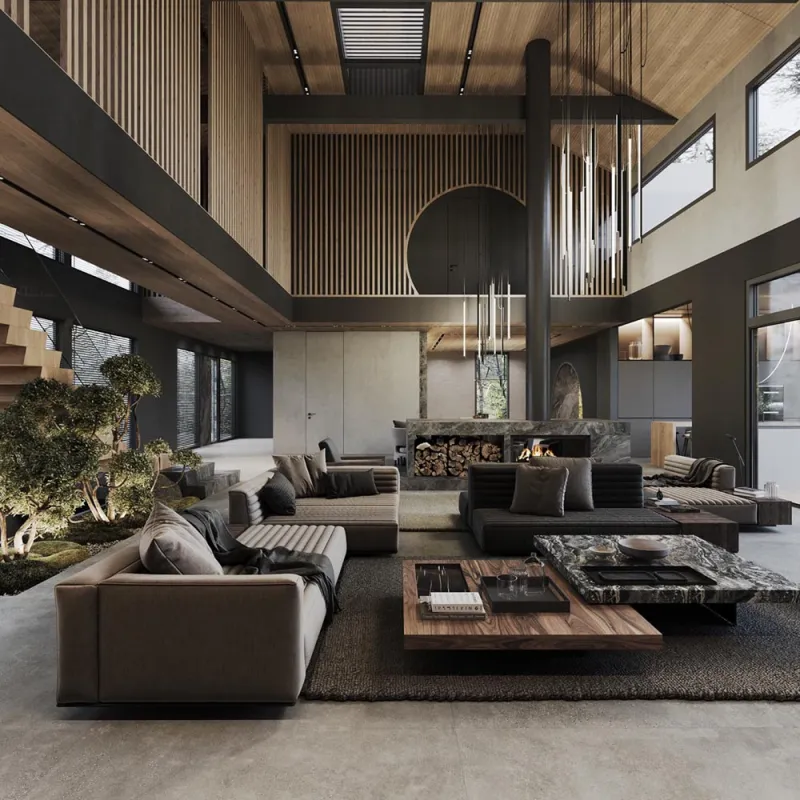
Begin with what is genuinely durable. Floor-to-ceiling glazing, when executed with high-performance specifications, belongs to the category of enduring architectural decisions. The appeal is not cyclical — it is fundamental. Human beings are biologically drawn to light, to prospect, to visual connection with landscape. These are not aesthetic preferences; they are evolutionary imperatives. The homes that have commanded premium valuations in markets from the Hollywood Hills to the Hudson Valley for decades share one consistent feature: they bring the outside in.
Luxury real estate brokers working in competitive coastal and mountain markets consistently report that buyers in the upper price brackets treat expansive glazing as a non-negotiable rather than a feature. It is the absence of glass, not its presence, that requires justification.
The open floor plan, similarly, has survived long enough to be considered structurally canonical in the luxury segment. Its appeal — the sense of volume, the flexibility of inhabitation, the visual continuity between living, dining, and kitchen — has not dimmed despite periodic predictions of its decline. What has evolved is the sophistication with which open plans are zoned: through ceiling height variation, material transitions, and strategic placement of structural elements rather than partition walls. This evolution represents refinement, not reversal.
What Will Last: Raw, Honest Materials
There is a meaningful difference between materials that are minimal in appearance and materials that are minimal in substance. Concrete, natural stone, solid hardwood, and structural steel belong to the former category — they are visually restrained but physically and historically substantial. Their appeal does not depend on a trend cycle because their authority predates one.
The current market premium for exposed concrete ceilings, honed marble countertops, and wide-plank white oak flooring reflects something more durable than fashion. These materials carry sensory weight — thermal presence, acoustic character, tactile depth — that manufactured alternatives cannot replicate. Designers and appraisers in markets like New York, Chicago, and Los Angeles consistently note that homes featuring authentic raw materials hold their premium positioning across market cycles in ways that their composite-surface counterparts do not.
The caveat is execution. Raw materials poorly specified — concrete that stains, marble that etches, wood that warps — become liabilities. The investment is not in the material alone but in the craftsmanship that installs and maintains it.
What Will Date: The Greige Everything Moment
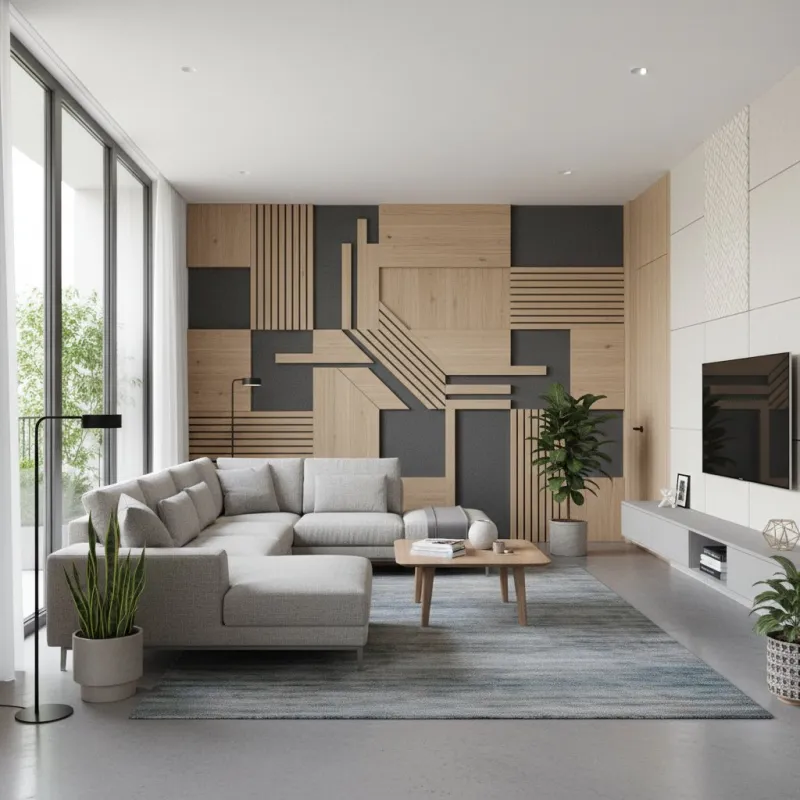
Here is where candor becomes necessary. The current dominance of greige — that particular blend of gray and beige that has colonized American luxury interiors for the better part of a decade — is showing early signs of aesthetic exhaustion. When a color palette becomes the default selection for everything from developer spec homes in suburban Atlanta to high-end custom builds in Aspen, its currency as a marker of sophistication begins to erode.
This is not an argument against neutral interiors. Neutrality, in principle, is timeless. The specific iteration of neutrality that defines this moment — the warm gray walls, the taupe linen everything, the alabaster fixtures — is a trend masquerading as a philosophy. Within five to seven years, expect a meaningful market correction toward richer, more individuated color choices: deep terracottas, aged brass, saturated greens. The homes that feel most current in 2030 will likely be those that used neutrality as a foundation rather than a destination.
What Will Date: Floating Vanities and Waterfall Edge Everything
Certain design details have reached a saturation point that signals their expiration. The floating bathroom vanity — a feature that appeared in virtually every luxury renovation and new build specification list between 2016 and 2024 — has become so ubiquitous that its presence no longer signals premium positioning. It signals competent execution of a now-standard template.
Similarly, the waterfall edge countertop — where the stone surface cascades vertically down the cabinet sides — has moved from architectural statement to developer shorthand. When a detail appears in both a $15 million custom home and a $600,000 production condominium, its ability to differentiate the former is effectively spent.
This is not a condemnation of these choices in isolation. It is an observation about market signaling. Affluent buyers in the upper quartile of the luxury segment are sophisticated readers of design language. They know when a detail has been diluted by volume, and they respond by moving their preference elsewhere. The designers who are already moving their clients away from these signatures — toward more considered, less replicable details — are positioning those homes well for the next valuation cycle.
What Will Date: The Minimalist Kitchen as Statement Piece
The handleless, fully integrated, monolithic kitchen — every appliance concealed, every surface flush, every element subsumed into a single unbroken plane — is perhaps the most photographed kitchen aesthetic of the current era. It is also one of the most functionally contested.
The design community is beginning to reckon with the practical limitations of total kitchen concealment: the cognitive load of interacting with spaces that offer no visual hierarchy, the maintenance demands of high-gloss continuous surfaces, the way that radical uniformity can make a kitchen feel more like a set than a room. Several prominent kitchen designers working in the New York and Los Angeles markets have noted a quiet but discernible shift among their clients toward kitchens that reintroduce material contrast, open shelving, and visible hardware — not as a retreat from minimalism but as an evolution of it toward something more livable.
The prediction here is not that the integrated kitchen disappears but that its most extreme expression — the room that reads as a closed white box — will feel dated in the same way that the all-stainless professional kitchen of the early 2000s now reads as a period piece.
The Principle Behind the Forecast
The pattern that emerges from this analysis is consistent: the design choices most likely to endure are those rooted in structural logic, material authenticity, and human biology. The choices most likely to date are those that prioritize visual novelty or that achieve their effect through repetition of a current shorthand.
For affluent buyers and renovators making decisions today, the operative question is not whether a choice looks current. It is whether it would have looked sophisticated twenty years ago, and whether it will look sophisticated twenty years hence. That test eliminates a surprising amount of what is currently passing for timeless luxury — and clarifies, with useful precision, exactly where the durable investments lie.