The Architecture of Silence: How Luxury Homes Are Mastering Acoustics Without Sacrificing the Glass
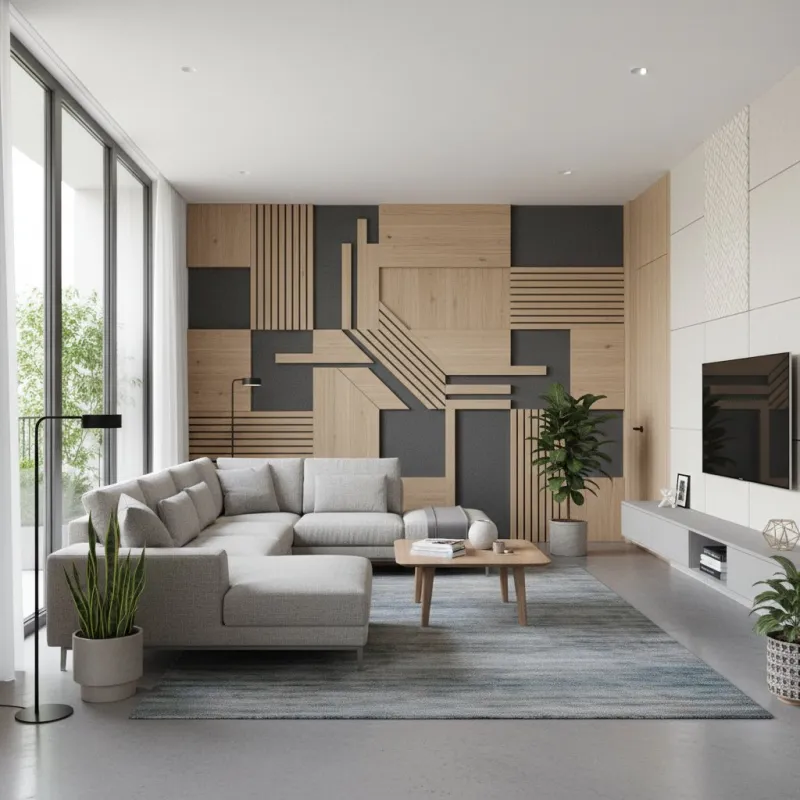
Photo: minimalist luxury interior design acoustic panels modern glass home serene living space, via cdn.decomagazine.org
Walk into a masterfully designed glass home and you will notice, almost immediately, a quality that no listing description adequately captures. It is not the view, though the view is extraordinary. It is not the light, though the light is transformative. It is the quiet. A particular quality of stillness that feels improbable given the expansiveness of the space — a hush that seems to exist in deliberate counterpoint to all that transparency.
This is not accidental. It is engineered.
Acoustic design has long been the unspoken discipline of high-end residential architecture — the technical foundation beneath the aesthetic surface that separates a truly livable luxury home from one that merely photographs well. In the context of glass-forward, minimalist interiors, where hard surfaces dominate and soft furnishings are deliberately restrained, the acoustic challenge is acute. And the solutions being deployed by the country's leading architects and acoustic consultants are as sophisticated as anything happening in the structural or mechanical disciplines.
Why Glass and Open Plans Create Acoustic Complexity
Sound behaves predictably in the presence of hard, non-porous surfaces: it reflects. Glass, polished concrete, stone, and large expanses of water — all hallmarks of contemporary luxury interiors — are among the most acoustically reflective materials in the residential palette. When sound waves encounter these surfaces, they bounce rather than absorb, creating reverberation that extends the decay time of any sound produced within the space.
In practical terms, this means that a conversation held across an open-plan kitchen and living area can feel effortful and fatiguing. Music that should feel intimate becomes diffuse. The ambient noise of a mechanical system, a street, or an adjacent room travels further and lingers longer than it would in a space with conventional proportions and material variety.
Open-plan layouts compound this effect by removing the partitions that would otherwise interrupt sound's path through a home. A closed-door bedroom is acoustically isolated from the kitchen by the combined mass of wall, door, and air gap. An open-plan loft offers sound virtually unimpeded passage from one end to the other.
The irony is precise: the very design decisions that make a home feel most expansive and liberated are the ones that create the most demanding acoustic conditions.
Laminated Glass: The First Line of Defense
The acoustic performance of a glass home begins at the envelope. Standard double-pane insulating glass units, while thermally adequate, offer relatively modest sound attenuation — typically in the range of 28 to 32 decibels of sound transmission class (STC) rating. For a home in an urban environment, adjacent to a road, or in a flight path, this is insufficient.
Acoustically laminated glass — in which a polyvinyl butyral (PVB) interlayer is bonded between glass lites — achieves meaningfully superior performance. Premium acoustic laminated units with asymmetric glass thicknesses (deliberately using panes of different dimensions to avoid resonance at the same frequency) can achieve STC ratings of 40 to 52, a difference that translates perceptually from "I can hear traffic" to "I am aware traffic exists."
Several high-end residential projects completed in the past five years in Los Angeles and New York have specified triple-pane units with dual laminated lites — a specification that approaches the acoustic performance of a solid masonry wall while maintaining the visual clarity that defines the design intent. The cost premium over standard glazing is substantial, often doubling or tripling the glass budget, but in acoustically challenging urban environments, architects and their clients increasingly regard it as non-negotiable.
Interior Acoustic Architecture: The Invisible Layer
Envelope performance addresses the intrusion of exterior noise. The interior acoustic environment — the quality of sound within the home itself — requires a separate and equally considered design strategy.
The most effective approach in minimalist glass interiors is the deliberate introduction of acoustic absorption at strategic locations, executed in materials and forms that are consistent with the design language of the space. This is where the collaboration between architect and acoustic consultant becomes genuinely creative rather than merely technical.
Acoustic plaster systems — seamless, paintable surfaces that appear identical to conventional drywall but contain a microporous substrate capable of absorbing mid- and high-frequency sound — have become a favored tool in this context. Applied to ceilings and upper wall surfaces, they provide meaningful absorption without any visible indication of their acoustic function. In a home where surface purity is a primary design value, this invisibility is essential.
Textile wall panels, long associated with the boardroom rather than the residence, have undergone a significant aesthetic evolution. Contemporary manufacturers including Kvadrat, Maharam, and several boutique American studios are producing acoustic panels in materials — leather, hand-woven wool, raw linen — that read as deliberate design elements rather than acoustic treatments. Integrated into joinery, suspended as room dividers, or applied as art-adjacent wall compositions, these panels can address reverberation while contributing positively to the tactile richness of a minimalist interior.
The Role of Soft Furnishings — Reconsidered
The minimalist interior's traditional resistance to the soft and the layered creates its own acoustic vulnerability. A room furnished with a single low-profile sofa, a glass coffee table, and a polished stone floor is, acoustically speaking, a very difficult environment. The instinct to add a large-format area rug, heavy drapes, and upholstered seating is acoustically sound — but must be executed with the same design discipline applied to every other element in the space.
Leading interior designers working in the minimalist luxury register have developed a sophisticated vocabulary for this challenge. The area rug, rather than being treated as an afterthought, becomes a foundational design element — often custom-woven in natural fibers, scaled generously, and selected as the tonal anchor around which the room is composed. Window treatments in high-performance acoustic fabrics, operated by motorized systems that integrate with the home's automation platform, provide both acoustic absorption and solar control in a single, elegantly resolved solution.
The principle at work is one of intentional density — ensuring that within the apparent spareness of a minimalist interior, sufficient mass and porosity exist to prevent the space from becoming acoustically inhospitable.
Mechanical Systems and Structural Isolation
In a quiet home, the sounds that remain become more prominent. HVAC systems, water supply lines, and home theater equipment that would be masked by ambient reverberation in a conventional interior are audible in their full detail in a well-treated glass home. Acoustic design at this level therefore extends to the mechanical and structural systems.
High-end residential mechanical systems are increasingly specified with variable-speed drives, oversized ductwork (which reduces air velocity and the associated noise), and vibration-isolated equipment platforms. Plumbing supply lines are wrapped in acoustic insulation and isolated from framing with elastomeric hangers. Home theater and music playback systems are installed in dedicated equipment rooms with acoustic isolation from living spaces.
This level of mechanical acoustic attention is standard practice in the most demanding residential projects — homes in the $5 million and above category in markets such as Beverly Hills, Greenwich, and the Upper East Side — where buyers expect not merely visual luxury but a fully resolved sensory environment.
Silence as the Ultimate Luxury
In a culture saturated with noise — digital, social, urban, domestic — the capacity to create genuine quiet has become one of the most meaningful things a home can offer. The architects and designers who understand this are not treating acoustics as a technical constraint to be managed. They are treating silence as a design material: something to be shaped, refined, and delivered with the same intentionality applied to light, proportion, and material.
The glass home at its most resolved is not simply a home you see through. It is a home you inhabit fully — with every sense engaged and, crucially, every sense protected. The view is the invitation. The silence is the reward.