The Discipline Behind the Calm: What Minimalist Luxury Homes Truly Demand of Their Owners
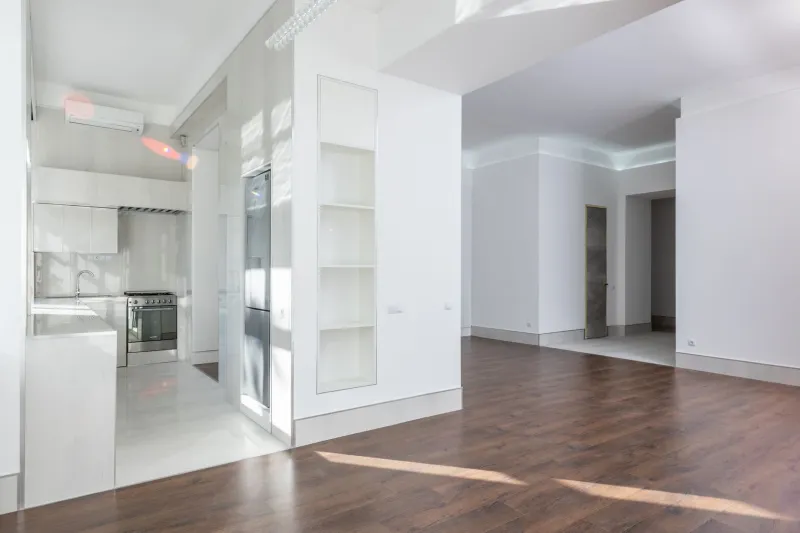
There is a particular kind of room that stops you at the threshold. Not because it is ostentatious or aggressively decorated, but because it is almost entirely still. The surfaces are clear. The palette is considered. Every object present seems to have earned its place through some silent, exacting audition. You sense, instinctively, that this space did not arrive at its current state by accident.
You are correct. It did not.
Minimalism, as it is practiced at the highest levels of residential design, is not a style so much as a sustained act of will. And for the growing number of affluent American homeowners who have embraced its principles — from the glass-walled retreats of the Colorado Rockies to the pared-back penthouses of Manhattan's West Side — the reality of living inside that will, day after day, is proving to be far more complex than any architectural rendering suggested.
The Seduction of Simplicity
The appeal is not difficult to understand. Minimalist interiors project a particular kind of authority. They communicate, without a single spoken word, that the person who inhabits them has made choices — deliberate, confident, irreversible choices — about what matters and what does not. In a culture saturated with noise, the quiet luxury of an uncluttered room reads as a form of power.
Designers who specialize in high-end minimalist spaces describe an almost universal moment in their client consultations: the instant a prospective homeowner walks into a reference project and exhales. Something releases. The visual complexity of their daily life, they realize, has been costing them more than they knew.
"People come to minimalism because they are exhausted," says one New York-based interior designer whose firm works exclusively with clients in the eight-figure residential market. "They want relief. What we have to help them understand is that the aesthetic they are falling in love with is not a state of rest — it is a practice."
The Psychological Weight of Restraint
That distinction — between rest and practice — sits at the center of what designers are now calling the minimalist paradox. A space that appears effortless demands, in fact, continuous effort. Every surface left clear is a daily decision. Every object introduced into the home is a negotiation between desire and discipline. The visual serenity that draws clients in is, in a very real sense, the product of perpetual vigilance.
Psychologists who study the relationship between environment and behavior have long noted that our surroundings both reflect and reinforce our internal states. A cluttered room can signal and amplify mental disorder. A carefully ordered space can promote clarity and reduce cognitive load. But the inverse is also true: a space that demands order can become a source of low-grade anxiety when the occupant's life — inherently dynamic, inherently accumulative — begins to press against its boundaries.
For wealthy homeowners who travel frequently, raise families, collect art, or simply live with the ordinary entropy of modern American life, the gap between the ideal and the lived reality of a minimalist home can become a persistent source of tension. The home they designed to bring them peace begins, quietly, to judge them.
"The homes that fail are the ones designed as photographs rather than residences," notes a Los Angeles-based architect whose work has appeared in several major design publications. "When there is no tolerance for the human being inside the space, the human being eventually breaks with the space — and usually, the space wins."
Designing for Resolve, Not Just Aesthetics
The most sophisticated practitioners in the luxury minimalist space have begun to address this tension at the design stage itself, building what some describe as "invisible infrastructure" — systems, storage solutions, and spatial logics that support the aesthetic without requiring superhuman discipline from the people who live within it.
Concealed cabinetry that extends floor to ceiling. Dedicated drop zones — discreetly positioned near entries — that intercept the daily accumulation of keys, mail, and personal effects before they reach the primary living spaces. Charging drawers integrated into millwork. Wardrobe systems engineered with such precision that maintaining order requires less effort than abandoning it.
The goal, in each case, is to reduce the friction between how the homeowner actually lives and how the home is designed to look. Minimalism, at this level of execution, is not about asking people to change — it is about designing an environment that makes the desired behavior the path of least resistance.
But even the most thoughtfully engineered home cannot fully externalize what is, at its core, an internal commitment. Designers who work with clients over long periods describe a recognizable arc: the initial enthusiasm, the early discipline, the gradual negotiation, and ultimately, a kind of reckoning. Homeowners who sustain the aesthetic tend to share a particular quality — not rigidity, but clarity about why the space matters to them beyond its appearance.
Intentionality as a Living Practice
"The clients who thrive in these homes have usually done some version of the philosophical work," observes a Chicago-based designer whose portfolio spans some of the Midwest's most notable private residences. "They are not just buying a look. They have asked themselves what they actually need to live well, and they have made peace with the answer. The home is an expression of that peace — not the source of it."
This distinction carries real implications for how the industry approaches the sale and design of minimalist luxury homes. A space that is conceived purely as an aesthetic statement — however impeccably executed — places its entire burden on the homeowner's willpower. A space that is conceived as a framework for intentional living distributes that burden across design, habit, and genuine personal conviction.
The difference, in practice, is the difference between a home that feels like a gallery and a home that feels like a life.
The Reward Proportional to the Commitment
None of this is meant to discourage. The homeowners and designers who speak most compellingly about minimalist living are, without exception, its most ardent advocates. They describe a quality of daily experience — a groundedness, a clarity, an almost physical sense of relief — that they find difficult to articulate but impossible to relinquish once known.
What they uniformly resist, however, is the mythology of effortlessness. The serene room at the threshold did not achieve its stillness passively. It was built — and it is maintained — through a sustained, conscious act of choosing.
For those prepared to make that choice, and to keep making it, the minimalist home offers something that no amount of decoration can replicate: the rare, quietly radical experience of living in complete alignment with what you believe.
That, ultimately, is the luxury the aesthetic was always pointing toward.