When Perfection Becomes a Prison: The Hidden Toll of Living Inside an Immaculate Minimalist Home

Photo by Photo by Salvo Media LLC on Unsplash on Unsplash
There is a particular kind of silence that descends when you first walk into a flawlessly designed minimalist home. The proportions are correct. The light is orchestrated. Every surface has been considered, every sightline composed. It is, by nearly every architectural measure, a masterwork. And yet, for a surprising number of the people who actually live inside these spaces, something quietly goes wrong.
Not structurally. Not aesthetically. Something more intimate — and far more difficult to articulate.
The Aspiration and the Reality
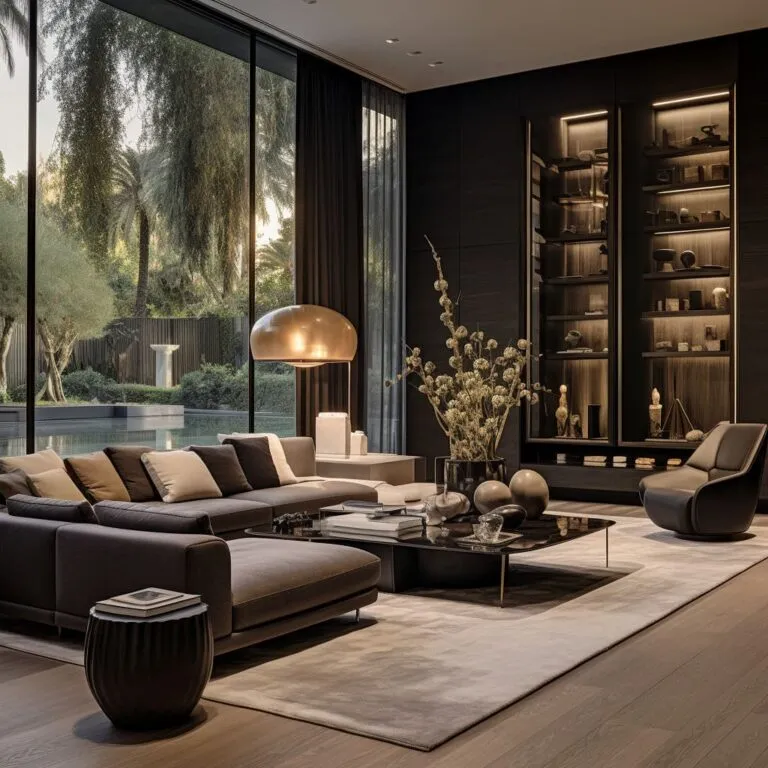
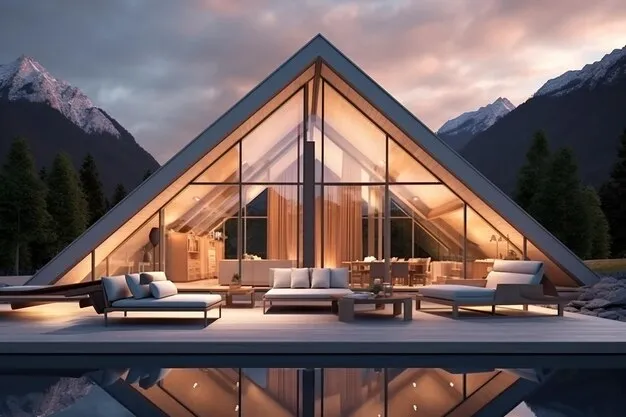
American luxury homebuyers have spent the better part of two decades chasing a particular vision of residential life: open volumes, floor-to-ceiling glass, materials that speak in whispers rather than declarations. The editorial imagery is seductive and pervasive. The finished homes, when executed by skilled architects, are genuinely extraordinary.
But a home is not a photograph. And the human beings who inhabit these spaces carry with them a lifetime of habits, attachments, and biological imperatives that do not pause for architectural elegance.
"I loved that house in theory every single day I owned it," says one former resident of a glass-and-concrete residence in the hills above Los Angeles, completed by a prominent West Coast firm in 2019. She asked not to be identified by name. "But I was anxious in it constantly. I couldn't leave a glass on the counter. I couldn't have my daughter's artwork on the refrigerator. It felt like living in a gallery that had made a terrible mistake letting me in."
Her experience is not isolated. Designers, psychologists, and real estate professionals who work at the upper end of the residential market are beginning to speak more openly about what some have taken to calling the livability gap — the measurable distance between a home's architectural ambition and its capacity to absorb the texture of actual human life.
The Psychology of Spatial Perfectionism
Dr. Sally Augustin, an environmental psychologist whose research examines how physical spaces influence behavior and cognition, has written extensively about the cognitive load imposed by highly ordered environments. Her findings suggest that spaces demanding constant behavioral compliance — where disorder feels like a moral failure rather than a natural condition — can generate low-grade but persistent psychological stress in their occupants.
"There's a meaningful difference between a space that invites calm and a space that enforces it," she has noted in her research. "One supports the nervous system. The other taxes it."
For minimalist homes designed to the highest specifications, this distinction is critical. The very qualities that make these residences so visually compelling — the absence of visual noise, the precision of material selection, the intolerance of accident — can, over time, work against the psychological ease they were intended to produce.
A homeowner in the Chicago suburbs, who relocated from a minimalist glass residence after three years, put it plainly: "We bought the house because we wanted to feel peaceful. We left it for the same reason."
What Designers Are Hearing
Within the design community, these conversations are becoming harder to dismiss as anecdotal.
Several prominent interior designers working in New York, Miami, and the Pacific Northwest report an uptick in clients returning to them — not for renovations, but for what one designer described as "rescue operations." These are homeowners who commissioned architecturally rigorous spaces and now find themselves unable to fully occupy them without a pervasive sense of transgression.
"The homes are beautiful. That's never the issue," says one New York-based designer who asked to remain anonymous given the sensitivity of the client relationships involved. "The issue is that beauty, at a certain level of precision, stops being inviting. It starts being supervisory."
The redesigns she now undertakes are rarely dramatic. A material softened here. A zone of deliberate visual warmth introduced there. The architectural bones remain. What changes is the home's tolerance for the presence of its owners — a concept she describes, with some irony, as "designing for permission."
The Clutter Instinct
Human beings are, by evolutionary design, accumulators. We assign meaning to objects. We mark territory. We use the surfaces of our homes as external memory systems, displaying photographs and artifacts that anchor us to identity and relationship. These impulses do not diminish in proportion to the price of one's real estate.
Minimalist design, at its most rigorous, asks homeowners to suppress or redirect these instincts entirely. For some individuals — those with naturally spare psychological relationships to objects — this presents no difficulty. For the majority, it requires a sustained and effortful discipline that, over time, can feel less like a lifestyle and more like a performance.
"I was performing minimalism for three years," admits a former resident of a glass-walled property in Marin County, California. "I had a storage unit fifteen minutes away where I kept everything I actually needed. The house was a stage set. We were the actors. Nobody ever broke character in front of guests, but behind the scenes, everyone was exhausted."
What the Market Reflects
Real estate professionals in high-design markets have begun observing a subtle but telling pattern: architecturally significant minimalist homes, particularly those built to exacting editorial standards, occasionally carry longer days-on-market figures than comparable properties with more conventionally livable interiors. The pool of buyers both capable of affording them and psychologically suited to inhabiting them is, it turns out, narrower than the demand for their imagery might suggest.
This does not diminish the architectural achievement. It simply acknowledges that a home's value is not reducible to its design integrity alone — that livability, warmth, and a certain generosity toward human imperfection are qualities with genuine market weight.
A More Honest Minimalism
The most thoughtful voices in contemporary luxury design are responding to this tension not by abandoning minimalist principles, but by interrogating them more rigorously. The question being asked in the best studios is no longer solely "How do we eliminate excess?" but rather "How do we design for the life that will actually be lived here?"
This means building in what some designers call "friction-free zones" — areas where accumulation is anticipated, even welcomed, without compromising the larger compositional logic of the space. It means selecting materials that improve with use rather than deteriorating under it. It means, fundamentally, designing homes that extend an invitation rather than issue a set of conditions.
Perfection, after all, is most powerful when it is generous enough to accommodate the imperfect lives unfolding within it. The homes that endure — that are truly inhabited rather than merely occupied — are those that understand this distinction. They are not less ambitious for it. They are, in every meaningful sense, more so.