Surrounded, Yet Sovereign: How Ultra-Luxury Glass Homes Are Redefining Urban Solitude

In the most densely populated corridors of America's premier cities, a counterintuitive architectural movement is gaining significant momentum. Wealthy homeowners are commissioning expansive glass residences not despite the urban crowd, but in deliberate conversation with it. The result is a new typology of dwelling — one that transforms density into a design asset and converts exposure into a precisely engineered form of sanctuary.
At first consideration, the proposition appears almost provocative. Why would a discerning buyer invest millions in floor-to-ceiling glazing within a city that never sleeps, never quiets, and never truly looks away? The answer, as it turns out, reveals as much about modern psychology as it does about contemporary architecture.
The Urban Paradox, Precisely Defined
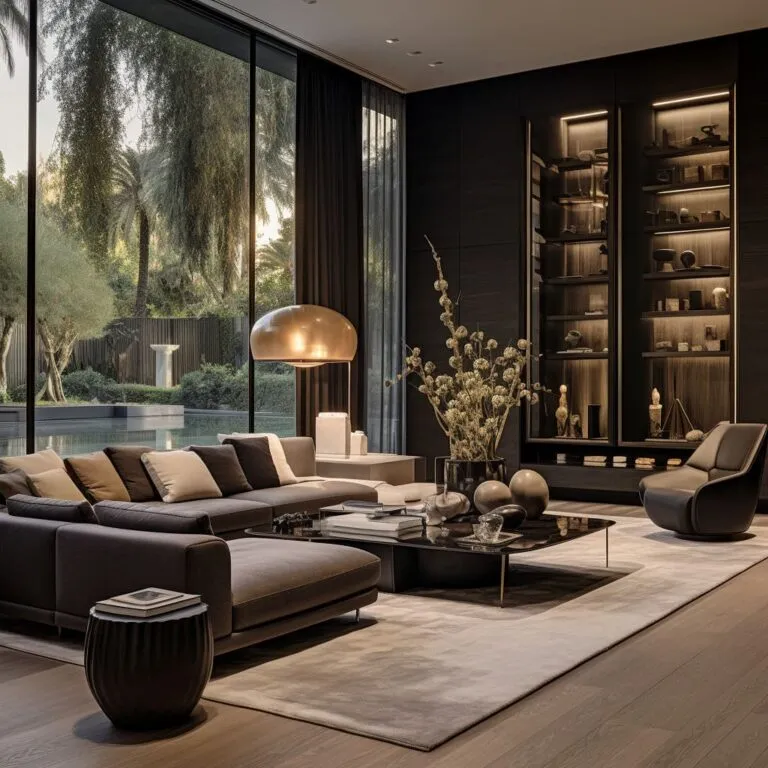
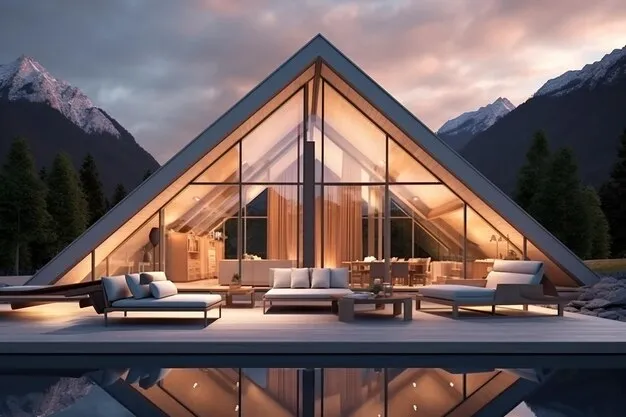
Across cities such as New York, Chicago, San Francisco, and Miami, a specific breed of luxury residence is emerging at the upper echelons of the residential market. These are not merely penthouses with generous windows. They are architecturally deliberate structures — often occupying the highest floors of slender supertall towers or perched atop low-rise buildings in historically dense neighborhoods — where glass serves as both the primary material and the central philosophical statement.
The paradox is this: the more surrounded a resident is by the city's kinetic energy, the more sovereign they feel within a glass-forward home. Architects who specialize in this sector describe the phenomenon with a kind of quiet confidence. The city becomes the boundary, not the interior. When you are elevated above the street grid, encased in high-performance glazing, and looking outward at a sea of anonymous movement, you experience a profound psychological separation that no solid wall could ever fully replicate.
This is not accidental. It is engineered.
Technology as the Invisible Curtain
The architecture of urban glass sanctuaries depends heavily on a suite of advanced privacy technologies that have matured considerably over the past decade. Electrochromic glazing — glass that transitions from transparent to translucent at the touch of a panel or a voice command — has become a foundational specification in residences at this price point. Some manufacturers now offer dynamic tinting systems capable of adjusting opacity in response to ambient light conditions, time of day, or even the movement of neighboring buildings' occupants.
Beyond dynamic glass, ceramic frit patterns applied to exterior panes allow natural light to flood an interior while rendering the glass effectively opaque from street level or adjacent structures. These micro-perforated coatings, invisible to the resident looking outward, create a one-way visual relationship between the home and its surroundings — the occupant observes the city; the city does not observe the occupant.
Acoustic lamination technology plays an equally critical role. The psychological sense of sanctuary depends not only on visual privacy but on the suppression of urban noise. Contemporary high-performance glazing systems, featuring multiple laminated layers and inert gas fills, now achieve sound transmission class ratings that would have seemed implausible in residential applications a generation ago. The roar of a Manhattan avenue or the persistent hum of a Chicago L train can be reduced, at the glass line, to something approaching library silence.
Siting as Strategy
Beyond material technology, the most accomplished practitioners of this architectural genre treat building placement as a primary privacy instrument. Strategic siting — the deliberate positioning of a structure relative to its neighbors, the sun's path, and the city's visual corridors — determines whether a glass home feels exposed or elevated.
In New York's Hudson Yards district, for example, several ultra-luxury towers have been sited and oriented such that their primary glazed facades face either the Hudson River or the open sky above the rail yards, rather than the windows of neighboring residential buildings. In Miami's Brickell neighborhood, architects have used setbacks, cantilevered floor plates, and angled curtain wall systems to ensure that a residence's most intimate spaces never achieve direct sightlines with adjacent towers.
The language used by architects working in this space is consistently spatial and territorial. They speak of commanding views rather than receiving them. They describe the city as something to be framed, not something to be absorbed. This distinction — between the passive experience of urban density and the active curation of it — is central to the appeal these residences hold for their buyers.
The Psychology of the Glass Sovereign
Environmental psychologists who study the relationship between built form and human behavior have begun to articulate what wealthy buyers have long intuited. The experience of occupying a glass-forward home in a dense urban environment activates a specific psychological register that combines the stimulation of visual richness with the comfort of physical protection.
This is sometimes described through the lens of prospect-refuge theory — a concept developed by geographer Jay Appleton that posits humans find environments most satisfying when they offer simultaneous prospect (the ability to survey a wide field) and refuge (the sense of being sheltered and concealed). A glass penthouse in a supertall tower delivers both conditions in their most extreme possible form. The resident surveys an entire metropolitan landscape while remaining entirely sheltered, entirely anonymous, entirely in control of what enters and what does not.
For the category of buyer drawn to these residences, this psychological configuration carries considerable appeal. Many are individuals whose professional lives involve continuous public exposure — executives, founders, public figures — for whom genuine privacy has become a form of scarcity. The glass home, counterintuitively, delivers that scarcity more completely than any walled compound.
What the Market Reflects
The pricing data emerging from this segment of the residential market tells its own story. Ultra-luxury glass residences in high-density urban cores are commanding premiums that exceed their already rarefied neighborhood comparables by meaningful margins. In several recent transactions across New York and Miami, units featuring full-perimeter glazing, integrated electrochromic systems, and strategic siting have closed at per-square-foot figures that represent twenty to thirty percent premiums over comparable non-glass residences in the same buildings.
Brokers who specialize in this tier of the market describe the glass sanctuary concept as one of the most compelling value propositions currently available to buyers at the upper end of the luxury spectrum. It is not simply a design preference. It is a lifestyle thesis — and buyers who subscribe to it are prepared to pay accordingly.
Designing the Threshold
Perhaps the most revealing detail in the architecture of these urban glass sanctuaries is the treatment of the threshold — the moment of transition between the city and the residence. In the most thoughtfully conceived examples, this transition is itself a designed experience. Entry sequences often move through compressed, material-rich spaces before releasing into the expansive glazed volume, a choreographic device that heightens the contrast between urban density and interior sovereignty.
The city does not disappear in these homes. It is never meant to. Instead, it is repositioned — from environment to spectacle, from context to content, from the world one inhabits to the world one observes. That repositioning, achieved through the precise application of glass, technology, and spatial intelligence, is ultimately what the most discerning urban buyers are acquiring.
In an age when true solitude has become among the rarest of luxuries, the glass sanctuary in the urban core offers something remarkable: the feeling of absolute aloneness, sustained by the unbroken presence of the world just beyond the pane.