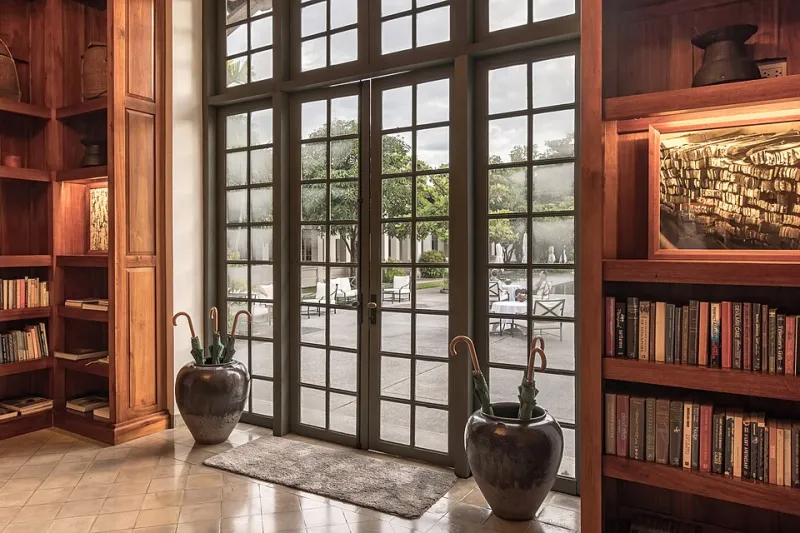
Built to Heal: How the Materials Inside Your Minimalist Home Shape Your Body and Mind
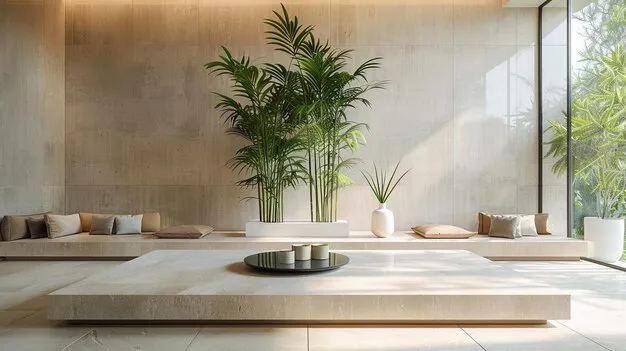
Photo: minimalist luxury home interior natural stone concrete glass wall sunlight wellness, via img.freepik.com
There is a particular kind of stillness that settles into a well-designed minimalist home — a quality of air, of light, of temperature that feels almost medicinal. For years, designers and architects attributed this sensation to aesthetics alone: the clean lines, the absence of visual clutter, the deliberate restraint. But a growing body of research in environmental psychology, building science, and materials engineering suggests something more precise is at work. The surfaces you select are not passive backdrops. They are active participants in your physical and mental health.
For the high-end homeowner — one who has already committed to the philosophy that less, done exquisitely, is more — the next frontier is understanding what those carefully chosen materials are actually doing to the body that inhabits them.
Glass: Light as Medicine, Glare as Stressor
No material is more central to the Glasshaus Living ethos than glass itself, and none carries a more nuanced wellness profile. Expansive glazing — the floor-to-ceiling walls, the structural skylights, the seamless indoor-outdoor transitions — delivers natural daylight deep into the interior. This is not a trivial benefit. Research published by the National Institutes of Health consistently links natural light exposure to improved circadian rhythm regulation, reduced cortisol levels, and measurably better sleep quality.
Yet glass is not unconditionally therapeutic. Low-quality or uncoated glazing can introduce ultraviolet radiation, generate thermal discomfort through solar gain, and create glare that triggers eye strain and cognitive fatigue. The specification, then, matters enormously. High-performance glazing — electrochromic smart glass, triple-pane low-emissivity units, or ceramic-fritted panels — filters harmful wavelengths while preserving the full-spectrum light that supports human biology. In luxury homes across the Mountain West and Pacific Coast, architects are increasingly specifying glazing systems that modulate tint dynamically, responding to sun position and interior light levels in real time. The effect is a room that feels perpetually, effortlessly balanced.
Concrete: Thermal Comfort and the Hidden Cost of Hardness
Polished concrete has become one of the defining surfaces of contemporary luxury minimalism — and for valid reasons. Its visual weight grounds a space without competing with it. Its durability is essentially generational. And its thermal mass, the capacity to absorb heat during the day and release it gradually at night, contributes meaningfully to indoor temperature stability, reducing mechanical heating and cooling demands while keeping occupants in a more consistent comfort band.
However, concrete's wellness credentials require careful qualification. Untreated or improperly sealed concrete can off-gas volatile organic compounds (VOCs) from sealers and curing compounds, degrading indoor air quality in ways that are invisible but physiologically significant. The American Lung Association identifies poor indoor air quality as a contributor to respiratory irritation, headaches, and long-term cardiovascular stress. For minimalist interiors where concrete constitutes large surface areas — floors, feature walls, countertops — selecting zero-VOC or low-emission sealers is not optional; it is foundational.
There is also an acoustic dimension. Hard surfaces amplify ambient sound, and in open-plan minimalist homes, this can translate into a subtle but persistent stress response. Strategic placement of textured concrete panels, combined with soft furnishing interventions and acoustic ceiling treatments, addresses the paradox of a material that looks serene but can, without mitigation, sound anything but.
Natural Stone: Ancient Material, Modern Wellness Logic
Marble, limestone, quartzite, and slate carry a primal authority that no manufactured surface has yet replicated. Part of this is cultural memory — stone has sheltered human beings for millennia — but part of it is measurable biophilic response. Research in environmental psychology, including studies conducted at institutions such as the University of Exeter, documents that exposure to natural materials reduces physiological stress markers, including heart rate and skin conductance, compared to exposure to synthetic alternatives.
In practical terms, natural stone also performs well on air quality metrics, provided it is sealed appropriately. Unlike synthetic composites, which may contain formaldehyde-based binders or plasticizers, natural stone is chemically inert. Certain varieties — granite in particular — carry low-level radon emission profiles that merit testing in enclosed spaces, though this risk is easily managed with proper ventilation design.
The thermal properties of stone also complement glass-forward architecture. In homes where glazing introduces significant solar gain, a stone floor or stone-clad fireplace wall acts as a passive thermal buffer, absorbing excess heat and moderating interior temperature swings. This is not an incidental benefit — it is an ancient form of climate control, refined and redeployed in the most sophisticated contemporary residences.
Sustainable Alternatives: Performance Meets Conscience
For homeowners seeking materials that align wellness with environmental responsibility, a new generation of surfaces is earning serious architectural attention. Cross-laminated timber (CLT) — engineered wood panels capable of structural application — has demonstrated measurable psychological benefits in multiple peer-reviewed studies, including one from the University of British Columbia that found occupants in wood-rich environments reported lower stress and higher well-being scores than those in conventional interiors.
Hempcrete, a composite of hemp hurd and lime, offers exceptional breathability, regulating interior humidity naturally and resisting mold growth — a meaningful advantage in humid climates from Florida to the Pacific Northwest. Recycled glass surfaces, compressed bamboo panels, and mycelium-based acoustic materials are entering the luxury specification market with increasing frequency, offering the visual restraint that minimalism demands alongside performance credentials that synthetic materials rarely match.
The Integration Imperative
A wellness-oriented material palette is not assembled material by material in isolation. It emerges from an integrated design logic — one in which glazing specifications inform thermal mass strategy, in which surface finishes are selected in conversation with ventilation design, and in which every choice is evaluated not only for how it looks but for what it does to the air, the temperature, and the nervous system of the person living within it.
Two homes illustrate this integration well. A recently completed residence in the hills above Marin County, California, combines electrochromic glazing with a radiant-heated limestone floor and cross-laminated timber ceilings. The result is an interior that maintains a steady temperature band year-round, supports natural light without glare, and delivers the biophilic warmth of wood in a space that reads, visually, as rigorously minimal. In a separate project outside Scottsdale, Arizona, a desert modernist home uses rammed earth walls — a material with extraordinary thermal mass — alongside floor-to-ceiling glass on the north-facing elevation, keeping interiors cool without mechanical intervention and reducing the home's HVAC load by an estimated thirty percent.
In both cases, the materials are doing exactly what good design should: working invisibly, performing continuously, and supporting the life lived within them.
What to Ask Before You Build
For homeowners approaching a new build or significant renovation, the wellness material conversation begins with a few precise questions. What are the VOC emission profiles of every finish being specified? How does the thermal mass of proposed surfaces interact with the glazing strategy? Is the acoustic environment being designed, or merely inherited? And critically — does the material palette support biophilic connection, or does it prioritize visual minimalism at the expense of sensory richness?
The answers will determine not only how your home looks, but how your home feels — and how it performs for the body and mind that inhabit it, every single day.