Beyond the Pane: What Glass-Forward Design Actually Does to Your Home's Resale Value
Photo: Internet Archive Book Images, No restrictions, via Wikimedia Commons
The luxury home market has long operated under a seductive premise: glass equals value. Floor-to-ceiling windows, curtain-wall facades, and frameless glazing have become shorthand for architectural ambition, and in the right contexts, they deliver. Yet the relationship between transparency and resale performance is considerably more complex than the prevailing narrative suggests. For every glass-forward property that commands a premium at closing, there is another that lingers on the market, its asking price quietly revised downward while its owners puzzle over what went wrong.
The difference, according to the professionals who appraise and sell these properties, almost never comes down to how much glass was used. It comes down to how intelligently it was deployed.
What the Numbers Actually Say
Appraisers working in the upper tier of residential markets across the United States have begun to document a pattern that challenges the glass-maximalist orthodoxy. In high-demand coastal markets — coastal California, the Pacific Northwest, and South Florida — properties featuring expansive glazing oriented toward meaningful views consistently outperform comparable homes by margins ranging from eight to eighteen percent, according to data compiled by luxury brokerage offices in those regions.
However, that premium does not scale linearly with glass coverage. Properties in which glazing was added speculatively — without a compelling visual destination, adequate solar management, or structural elegance — frequently appraise at or below the cost of the glass itself. "The view is the asset," explains one senior appraiser with more than two decades of experience in the Southern California luxury market. "The glass is simply the mechanism for accessing it. When buyers pay a premium, they are paying for what they see through the window, not for the window itself."
In landlocked markets, the calculus shifts further still. In cities such as Denver, Nashville, and the affluent suburbs of Chicago and Atlanta, glass-forward design commands a premium primarily when it is paired with deliberate landscape architecture — curated gardens, water features, or woodland settings that give the transparency a reason to exist. Without that visual counterpart, extensive glazing can actually suppress value by raising buyer concerns about privacy, energy costs, and long-term maintenance.
The Frame Is Not a Detail
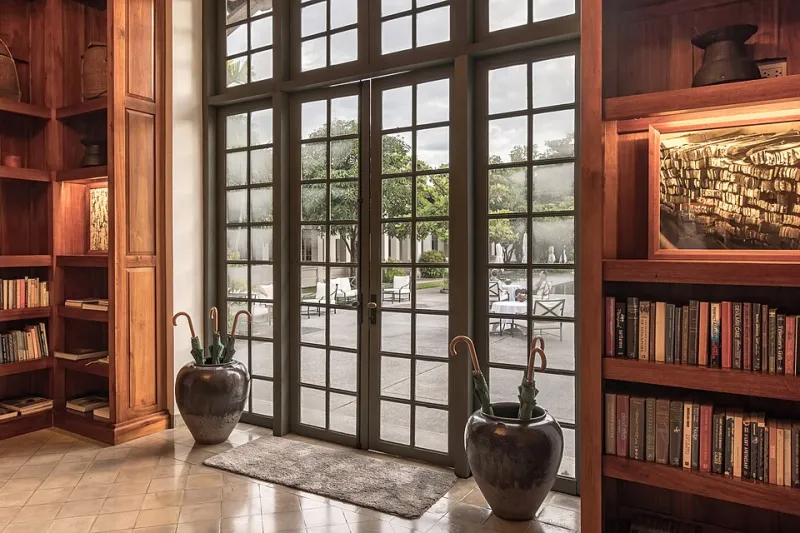
Among the specific design choices that appraisers and luxury agents consistently flag as value drivers, the quality and profile of the framing system ranks near the top. Thin-profile aluminum and steel frames — particularly those with thermally broken construction — signal a level of engineering sophistication that resonates with informed buyers. They allow the glazing to read as a considered architectural element rather than a contractor-grade upgrade.
By contrast, heavy vinyl or standard aluminum frames, regardless of the glass quality they support, tend to read as residential-grade interventions in a market that rewards commercial-specification detailing. "The frame tells a buyer what category of home they are standing in," notes one luxury listing agent based in Miami who specializes in architect-designed properties. "A slim steel profile next to a triple-pane unit says something entirely different than a white vinyl casement, even if the square footage of glass is identical."
The distinction matters at appraisal. Comparable sales adjustments in the luxury segment increasingly account for glazing system quality as a discrete variable, separate from window area, in markets where the buyer pool is sophisticated enough to recognize the difference.
Placement, Orientation, and the Solar Equation
Perhaps no single factor undermines the value of glass-forward design more reliably than poor solar orientation. A western-facing wall of unmanaged glazing in a Phoenix or Las Vegas property introduces carrying costs — in cooling load and UV-related interior damage — that informed buyers price into their offers with considerable precision. Energy consultants who work with luxury buyers in Sun Belt markets report that clients routinely request utility cost projections before submitting offers on glass-intensive properties, and that unfavorable numbers reliably suppress bids.
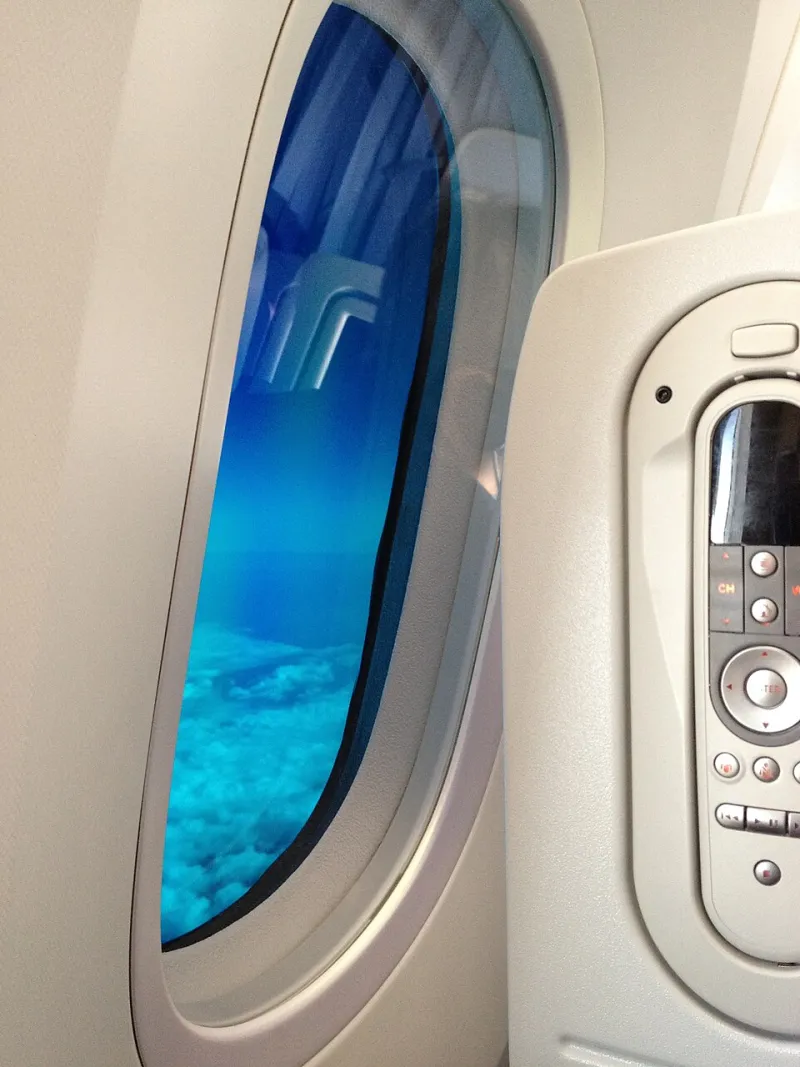
The solution is not to reduce glass, but to manage it. Electrochromic glazing — glass that transitions between clear and tinted states in response to electrical signals — has moved from novelty to expectation in the upper tier of new construction across California and Texas. Properties equipped with dynamic glazing systems are increasingly positioned as premium assets in their own right, with agents citing the technology as a specific selling point that addresses buyer anxiety about solar gain without compromising the architectural vision.
North-facing glazing, which delivers consistent, diffuse natural light without the thermal and UV liabilities of southern and western exposures, commands particular respect among architects and appraisers alike. In the studio and gallery traditions of residential design, north light has always been prized for its quality; in the current market, it is also prized for its economics.
The Material Grade Hierarchy
Not all glass performs equally, and the market is beginning to price that reality accordingly. Triple-pane, low-emissivity units with argon or krypton fill represent a meaningful step above standard double-pane construction in both thermal performance and acoustic attenuation — properties that translate directly into buyer comfort and, by extension, into competitive offers.
Laminated glass, which bonds two or more panes with an interlayer that prevents shattering, carries additional value in hurricane-prone markets and in properties where security is a primary concern. In South Florida, the Miami-Dade County impact-resistance certification is not merely a code requirement; it is a marketing asset that agents reference explicitly in listing materials.
At the highest specification level, structural glazing — in which glass panels are engineered to serve as load-bearing elements rather than infill — commands a premium that reflects both the engineering complexity and the visual drama it produces. Properties featuring structural glass floors, cantilevered glass staircases, or glass-walled swimming pools occupy a distinct category in the market, one in which the glass itself becomes the primary architectural statement and is priced accordingly.
The Discipline of Restraint
The most consistent finding across conversations with luxury real estate professionals is that the properties which perform best at resale are not those with the most glass, but those in which every glazed surface serves a legible purpose. Transparency deployed with discipline — to frame a view, to borrow light from a courtyard, to dissolve the boundary between an interior living space and a considered exterior — reads to buyers as architectural intelligence. Transparency deployed for its own sake reads as excess, and excess, in a market that increasingly prizes considered minimalism, is not a premium.
The glass ceiling, it turns out, is not a barrier to value. It is a reminder that the ceiling itself — its proportions, its framing, its relationship to the space below — matters as much as what it is made of.