Glass That Thinks: How Intelligent Window Technology Is Transforming the Luxury Home Experience
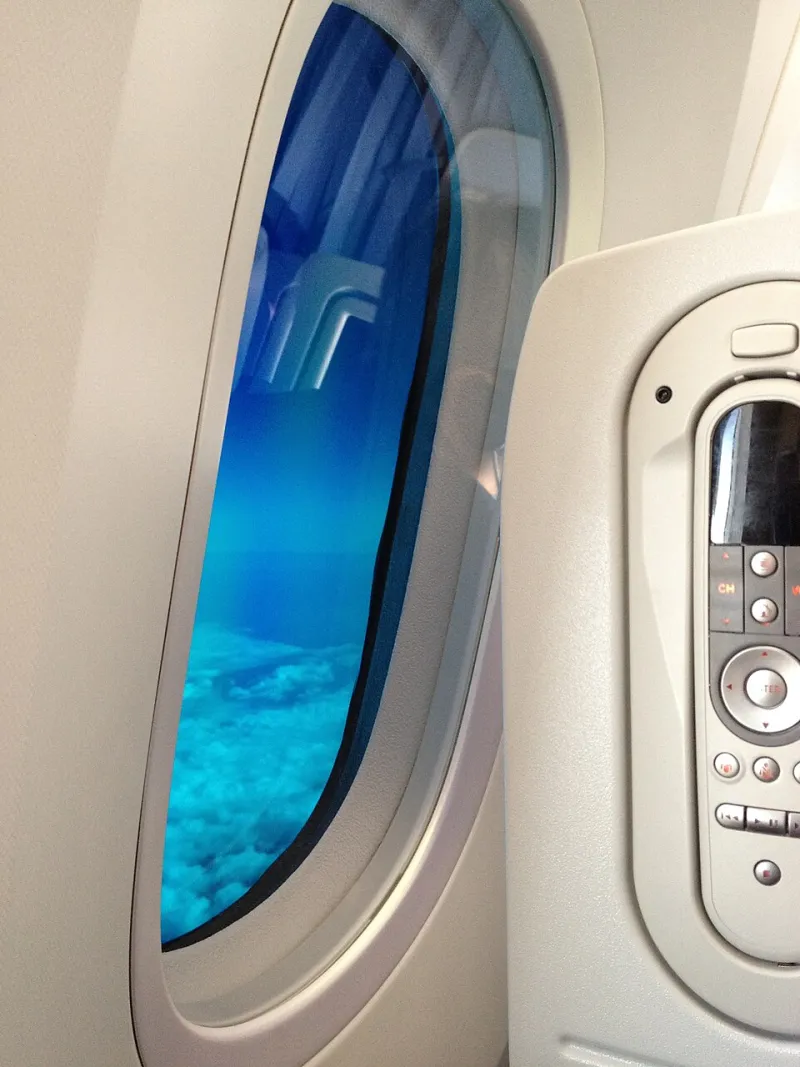
Photo: Jun Seita from Palo Alto, CA, U.S., CC BY 2.0, via Wikimedia Commons
For decades, the defining tension in contemporary residential architecture was a deceptively simple one: how do you build a home that breathes with natural light while still protecting the intimacy of the lives lived inside it? Architects and their clients navigated this dilemma through careful site orientation, strategic landscaping, and the selective placement of walls. These were elegant solutions, but passive ones. The glass itself remained inert—beautiful, luminous, and entirely indifferent to the needs of the moment.
That passivity is now ending. A convergence of materials science, building technology, and consumer demand has produced a category of products that transform glass from a fixed architectural element into a responsive, intelligent surface. For homeowners invested in the aesthetic language of modern minimalism—those who have built their living environments around openness, transparency, and the unobstructed flow of light—these technologies represent something genuinely significant: the freedom to have everything.
The Science Behind the Shift
At the center of this transformation is electrochromic glass, a material that alters its tint in response to a low-voltage electrical current. First developed for aerospace applications, the technology has matured considerably over the past decade, and its adoption in high-end residential construction has accelerated sharply. Manufacturers such as View, Inc. and Saint-Gobain have brought sophisticated, app-controlled systems to the American luxury market, allowing homeowners to modulate transparency across an entire facade from a single interface.
The principle is straightforward: ions move between thin film layers within the glass panel when current is applied, shifting the material from fully clear to a deep, neutral tint. The transition is gradual and uniform—there is no mechanical component, no blind, no shade. The glass simply becomes something different, and then, when instructed, becomes itself again.
A related but distinct technology, polymer-dispersed liquid crystal (PDLC) glass—commonly marketed under the term "smart glass" or "switchable privacy glass"—operates on a different mechanism. In its default, unpowered state, the liquid crystals within the panel are randomly oriented, rendering the glass opaque. When current is applied, the crystals align, and the panel becomes transparent. This binary quality makes PDLC particularly well-suited to spaces requiring immediate, complete privacy: primary bathrooms, home offices, and street-facing bedroom walls.
Thermochromic and photochromic glass, which respond to heat and ultraviolet light respectively rather than electrical input, round out the current landscape of adaptive glazing. These passive systems require no infrastructure or control interface, making them an appealing option for secondary glazing applications where automation is less critical.
Deployed in Practice: American Installations Leading the Way
The real measure of any architectural technology is not its specification sheet but its integration into lived space. Across the United States, a growing number of luxury residential projects are demonstrating what thoughtful deployment of intelligent glass can achieve.
In the hills above Los Angeles, a recently completed estate designed by a prominent West Coast architecture firm replaced the entire south-facing wall of its primary living pavilion with a View electrochromic system spanning nearly forty feet. The homeowners, who had previously relied on motorized shading to manage the intense Southern California afternoon light, found that the smart glass delivered something their previous solution could not: uninterrupted sightlines to the canyon below at all hours. The glass manages solar heat gain autonomously, adjusting its tint in response to real-time weather data, while the owners retain manual override through a wall panel and mobile application.
In the Pacific Northwest, where overcast skies make every available photon precious, a Seattle-area residence incorporated PDLC glass into its street-facing ground floor to address a more social concern: the home sat on a corner lot with considerable pedestrian traffic. The owners were unwilling to sacrifice their connection to the neighborhood's mature tree canopy, but equally unwilling to live on display. Switchable privacy panels, installed flush with the structural framing and virtually indistinguishable from standard glazing, provided the resolution. At the touch of a button, the ground floor shifts from fully transparent to a soft, frosted white—a transformation that takes less than a second and leaves the architectural composition entirely intact.
In Miami's Coconut Grove neighborhood, a waterfront property took a more comprehensive approach, integrating electrochromic glass across multiple elevations and connecting the system to the home's broader automation platform. The result is a residence that responds to the time of day, the position of the sun, and the preferences of its occupants as a unified, coordinated whole.
Design Integrity as a Non-Negotiable
What distinguishes the most successful intelligent glass installations is not the sophistication of the technology itself but the discipline with which it has been integrated. The defining characteristic of modern luxury architecture—its commitment to visual calm, to surfaces unmarred by mechanical intrusion—demands that the technology disappear entirely when not in use.
Leading architects working with these systems are insistent on this point. Frames must be minimal. Control interfaces must be considered as carefully as any other interior element. The wiring and infrastructure that power electrochromic or PDLC systems must be fully concealed within the building envelope. When these conditions are met, the result is a space that appears no different from any other rigorously designed glass-forward home—until it is asked to be.
This invisibility is, paradoxically, the technology's most compelling feature. It does not announce itself. It simply performs.
The Investment Calculus
Intelligent glazing systems represent a meaningful capital expenditure. Electrochromic glass currently commands a premium of several times the cost of high-performance standard glazing, and full-facade installations in large-format luxury homes can represent six-figure line items. PDLC systems are somewhat more accessible, particularly for targeted applications.
However, the calculus extends beyond initial installation costs. Smart glass systems that actively manage solar heat gain can reduce cooling loads substantially in sun-intensive climates, delivering measurable reductions in energy expenditure over time. Several products on the market now qualify for federal energy efficiency tax credits, partially offsetting the premium. And for homeowners who have invested significantly in the architectural and interior language of their residence, the elimination of mechanical window treatments—with their attendant maintenance requirements and visual disruption—carries its own form of value.
A New Vocabulary for Privacy
Ultimately, what intelligent glass technology offers the luxury homeowner is not merely a technical solution to a practical problem. It offers a new vocabulary for the relationship between a residence and its context—between the private life conducted within and the world observed beyond the glass.
The home has always been a stage for the life imagined as well as the life lived. In the finest contemporary residences, glass is the medium through which that life is framed and revealed. The capacity to modulate that frame—to open it fully, to draw it inward, to find every gradation between—represents an expansion of what it means to inhabit a designed space with intention.
The glass, at last, is listening.