The Return of Touch: How Luxury Homeowners Are Reclaiming Texture in the Age of Radical Minimalism
There is a particular kind of silence that has nothing to do with sound. It lives in rooms where every surface is smooth, every edge is resolved, and every material has been selected precisely because it asks nothing of you. For a certain generation of luxury homeowners, this silence was the point — the hard-won reward of a life edited down to its most essential form. Then, gradually, something shifted. The silence began to feel less like peace and more like absence.
Across the United States, interior designers working at the highest levels of the residential market are fielding a request they rarely heard a decade ago: put something back. Not clutter. Not nostalgia. Not the maximalist excess that minimalism once rebelled against. Something subtler, and in many ways more demanding — texture. Depth. The quiet assurance that a surface will feel different from how it looks.
When Restraint Becomes Deprivation
The psychological case for minimalism was always compelling. Cognitive research has long supported the idea that visual complexity can elevate stress levels, fragment attention, and undermine a sense of calm. Luxury brands, architects, and shelter publications embraced this science enthusiastically, and for good reason: the spare, light-filled interiors that emerged from this thinking were genuinely beautiful. They photographed brilliantly. They communicated a particular kind of status — one rooted in discernment rather than accumulation.
What that research did not fully account for was the opposite condition. The human nervous system is not merely threatened by overstimulation; it is equally destabilized by its absence. Sensory deprivation, even in its mildest residential form, carries real psychological weight. Spaces that offer no variation in surface, no invitation to touch, no material warmth tend to produce a low-grade but persistent unease — a feeling that something essential has been withheld.
Designers are now naming this experience openly. "We've had clients describe their own homes as cold, even clinical," says one New York-based interior architect whose portfolio spans penthouse residences from Manhattan to Miami. "They didn't want more furniture. They wanted the room to feel like it had a body."
The Anatomy of Tactile Luxury
What does it mean, practically, to restore sensory engagement to a minimalist interior without dismantling its essential character? The answer, as the most thoughtful designers are discovering, lies not in addition but in substitution — replacing one kind of precision with another.
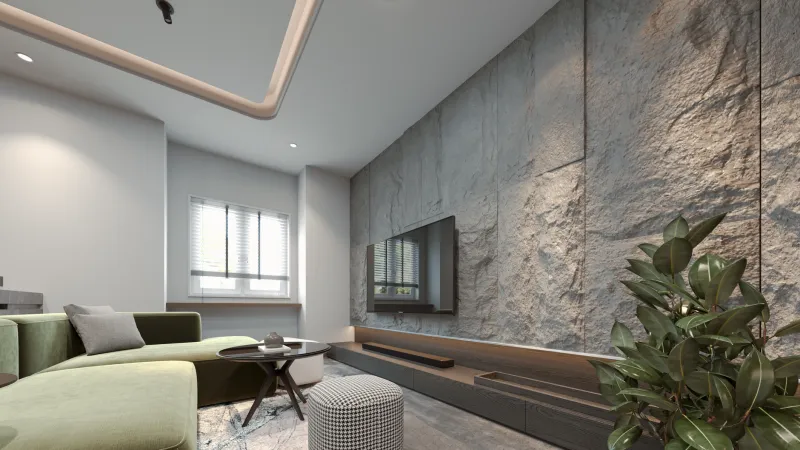
Raw-edged stone, for instance, offers the same formal gravity as polished marble while introducing a surface that rewards close attention. Limewash plaster, applied to a single architectural wall, creates a depth of color and shadow that flat paint categorically cannot replicate. Bouclé upholstery — that looped, nubbled textile that has migrated from fashion into interiors with remarkable speed — provides tactile complexity within a silhouette that remains entirely modern. Handwoven textiles, whether deployed as area rugs, throws, or wall-mounted panels, carry the visible evidence of human labor in a way that machine-finished surfaces never can.
Each of these choices operates on the same principle: they introduce variation that is felt as much as seen. They give the eye — and the hand — somewhere to travel.
Layering Without Accumulating
The fear among many homeowners who have committed deeply to minimalist interiors is that any concession to texture represents a step toward disorder. This anxiety is understandable, but it reflects a conflation of two distinct design values: restraint and sterility. The former is a genuine virtue. The latter is its pathological extreme.
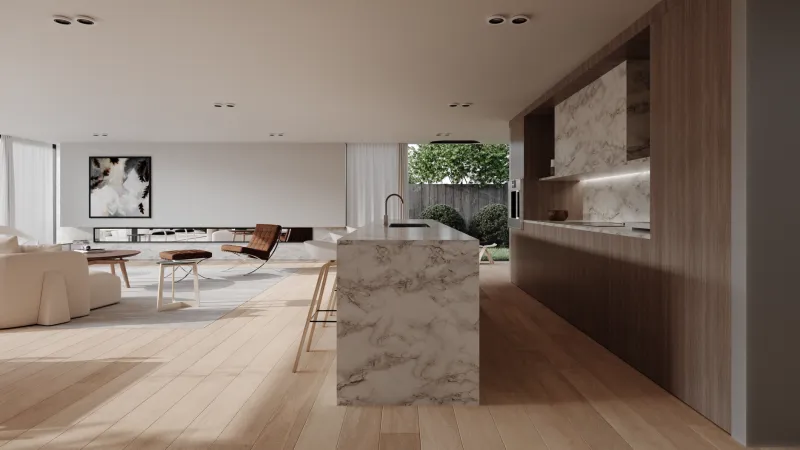
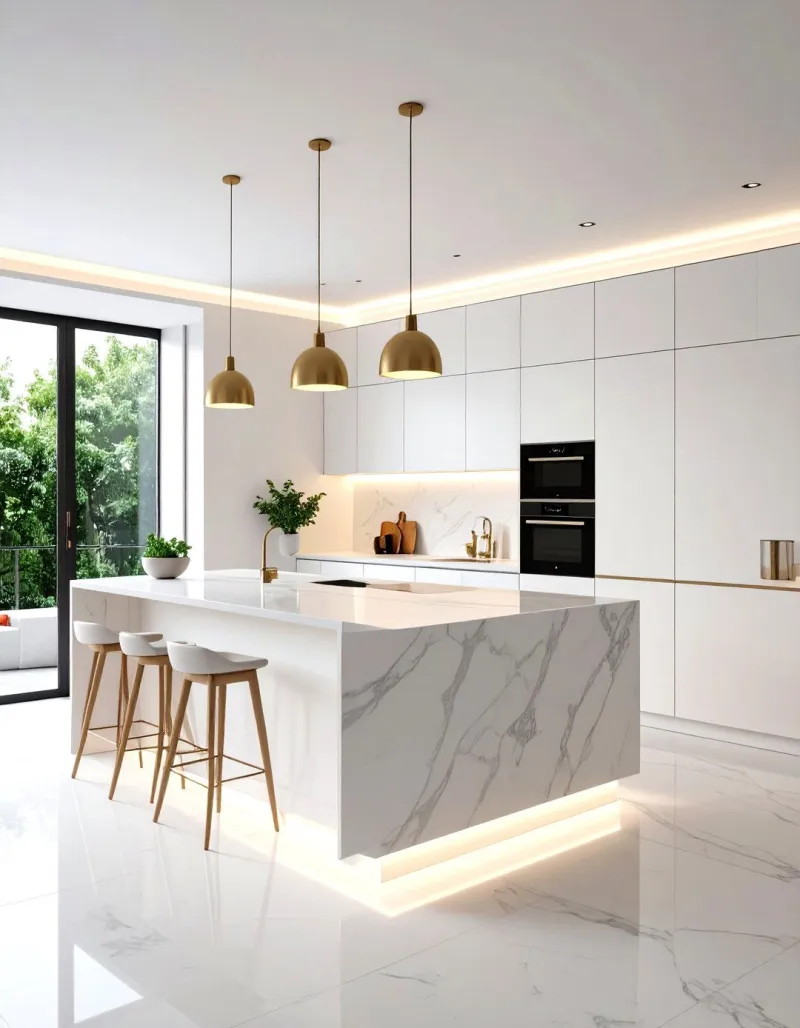
The most sophisticated contemporary interiors are demonstrating that these values need not be in conflict. A living room anchored by a poured-concrete floor can accommodate a hand-knotted wool rug of considerable visual complexity without losing its architectural integrity. A kitchen defined by flat-front cabinetry and integrated appliances becomes more human — not less refined — when its island is surfaced in honed rather than polished stone. A bedroom stripped of all decorative objects can still offer profound sensory comfort through the weight and weave of its bedding.
The operative principle is what designers sometimes call controlled layering — the deliberate introduction of tactile variation at specific moments within a space, rather than as a continuous background condition. The restraint remains. The sterility does not.
Material Honesty as a Luxury Proposition
There is also a market dimension to this conversation that deserves acknowledgment. As the luxury residential sector continues to mature, the definition of high-end finish is quietly evolving. For much of the past two decades, the premium signal was smoothness — surfaces so perfectly resolved that they seemed to have no origin, no process, no material history. Polished, lacquered, seamless.
That signal is shifting. Among the most discerning buyers in markets like Aspen, the Hamptons, and coastal California, there is a growing appetite for what might be called material honesty — finishes that reveal their own nature rather than concealing it. Rough-sawn oak that shows its grain. Concrete that retains the ghost of its formwork. Ceramic tile with the slight irregularities of hand-pressing. These are not imperfections. They are, increasingly, the mark of genuine quality.
This shift reflects something deeper than aesthetic preference. It speaks to a broader cultural recalibration around authenticity — a recognition that the most rarefied luxury is not the absence of all evidence of making, but the presence of making done with exceptional care.
Designing for the Senses, Not the Photograph
Perhaps the most important lesson embedded in this trend is one about the limits of visual culture. The interiors that defined luxury aspiration for the past decade were, in a meaningful sense, optimized for the image — for the architectural photograph, the social media post, the glossy editorial spread. They were spaces that communicated powerfully at a distance, through a screen, in two dimensions.
What they sometimes failed to deliver was the experience of actually inhabiting them. The warmth of a material under your hand. The slight give of a surface underfoot. The way a woven textile catches afternoon light differently from one hour to the next. These are pleasures that no photograph can convey, and they are, ultimately, the pleasures that make a home feel genuinely livable rather than merely impressive.
The homeowners now asking their designers to reintroduce texture are not abandoning the ideals that drew them to minimalism in the first place. They are refining those ideals — moving from a definition of luxury as visual perfection toward something more demanding and more rewarding: spaces that are as pleasurable to live inside as they are to look at.
In that aspiration, there is nothing retrograde. There is, instead, a more complete understanding of what it means to elevate a space — and, by extension, a life.