Automated Into Absence: How Smart Home Technology Is Quietly Severing Residents From Their Own Spaces
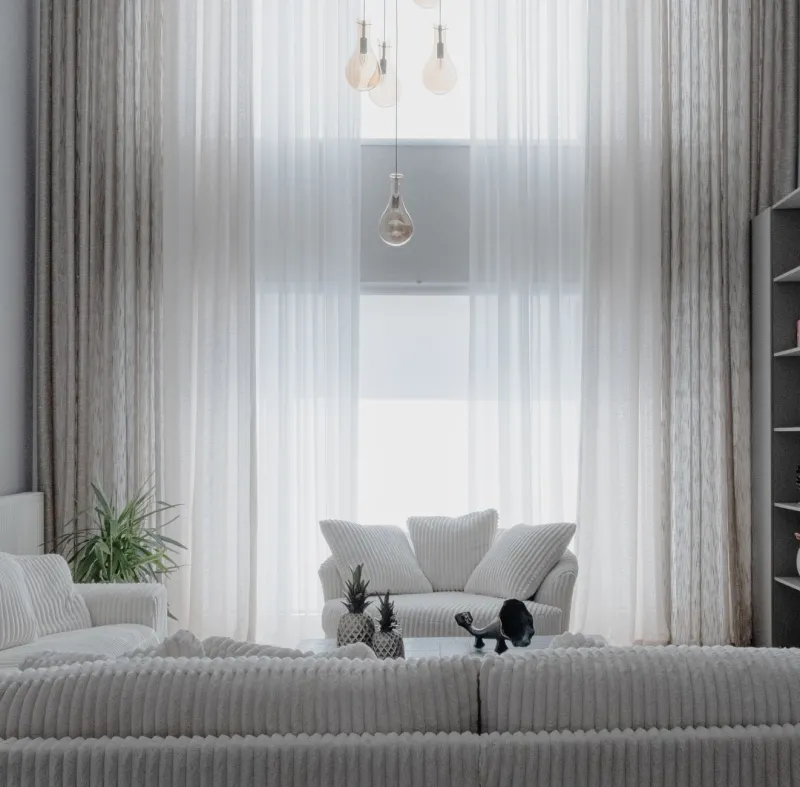
There is a particular kind of stillness that descends when you enter a home that has already prepared itself for you. The lights have adjusted. The thermostat has settled at your preferred temperature. A curated playlist filters softly through concealed speakers. The shades have drawn themselves against the afternoon glare. Nothing has been asked of you. Nothing, it seems, is required.
For many affluent American homeowners who have invested substantially in integrated smart home systems, this frictionless arrival represents the fulfillment of a long-held promise — the apex of modern domestic comfort. Yet an emerging conversation among neuroscientists, behavioral psychologists, and some of the country's most respected luxury interior designers is beginning to complicate that picture considerably. The very automation that eliminates effort, they argue, may also be eliminating something far less replaceable: the felt sense of inhabiting one's own home.
The Neuroscience of Agency in Domestic Space
Human beings are not passive recipients of their environments. According to research in environmental psychology, the act of physically adjusting one's surroundings — dimming a lamp, opening a window, choosing a room temperature — constitutes a form of low-level but meaningful engagement with space. These micro-decisions, individually unremarkable, collectively construct what researchers describe as a sense of ownership presence: the ongoing, embodied awareness that a space belongs to you and responds to you.
When those decisions are delegated to an algorithm, the feedback loop is severed. The environment still responds, but not to a conscious choice — to a prediction. And predictions, however accurate, are not the same as preferences expressed in the moment. Dr. Renata Voss, a cognitive neuroscientist affiliated with a research program at Northwestern University, has studied how environmental control affects attentional engagement in domestic settings. Her preliminary findings suggest that residents in highly automated homes demonstrate measurably reduced attentional anchoring to their physical surroundings — a phenomenon she describes informally as "spatial drift."
"The brain registers a perfectly managed environment as background," she noted in a recent symposium on technology and wellbeing. "When nothing requires your participation, nothing commands your presence. You are, in a neurological sense, less there than you believe yourself to be."
The Architecture of Invisible Decisions
The luxury home market has embraced automation with particular enthusiasm. Integrated systems from brands such as Crestron, Savant, and Control4 are now standard specifications in high-end new construction across markets including New York, Los Angeles, Miami, and the Pacific Northwest. These platforms can govern lighting scenes, HVAC scheduling, window treatments, audio-visual environments, security, and even the behavior of connected kitchen appliances — all coordinated through machine-learning profiles that refine themselves against observed behavioral patterns.
The design ambition is coherent and, in many respects, admirable. A home that learns its inhabitants is a home that serves them more precisely over time. For residents with demanding professional schedules, the reduction of domestic friction is not a trivial luxury; it is a genuine quality-of-life enhancement.
But interior designers working at the highest levels of the market are beginning to register a subtle complaint from clients that defies easy categorization. "They come to me not knowing quite what to say," explains Marcus Ellery, a New York–based designer whose practice focuses on minimalist residential interiors across the Northeast and West Coast. "The home is beautiful. The systems work perfectly. And yet they feel — their word, almost always — disconnected. As though they are guests in their own house."
Ellery has begun advising clients to retain what he calls "deliberate zones of manual engagement" — areas of the home where automation is intentionally absent, where a person must choose to light a candle, adjust a blind by hand, or set a temperature themselves. The response, he reports, has been striking. "Something as simple as a manually operated reading lamp in a study changes how people relate to that room. They chose that light. It is theirs in a way the automated light is not."
When Efficiency Becomes Estrangement
The psychological phenomenon at work here has conceptual roots in what psychologists call the IKEA effect — the well-documented tendency for people to assign disproportionate value to objects and environments they have personally shaped, however modestly. A home whose every condition has been pre-optimized by software offers its inhabitants no equivalent of that shaping act. The environment is complete before they arrive. Their presence, in a design sense, is almost incidental.
This dynamic is compounded by the nature of voice-command interfaces, which have become the primary interaction layer for many smart home systems. When a resident addresses a room — "lower the lights," "raise the temperature," "close the shades" — the command is received and executed without tactile or spatial engagement. The body does not move through the room to accomplish the change. The hand does not touch the wall. The interaction is verbal and immediate, and the environmental shift, however perceptible, carries no physical memory.
Over time, homes experienced primarily through voice commands and automated routines may register in memory with less spatial richness than homes engaged with more directly. The rooms become, in a sense, sets rather than spaces — beautifully arranged, efficiently managed, but experienced at one remove.
Designing for Reengagement
The most thoughtful practitioners in luxury residential design are responding not by rejecting smart home technology — its utility is too substantial and its client demand too consistent — but by reconsidering how automation is layered into a home's experiential architecture.
Several leading firms have begun distinguishing between what they term infrastructural automation and experiential automation. The former governs systems that residents rarely wish to engage with consciously: security protocols, HVAC efficiency cycling, appliance scheduling. The latter governs the sensory qualities of a room — its light, its temperature, its acoustic character — and is increasingly being designed with intentional friction, requiring a small but deliberate act of human input before the environment responds.
The distinction is philosophically significant. It acknowledges that not all convenience is equivalent in its effects, and that the experience of a luxury home is not purely a function of its performance metrics. A home can operate with extraordinary precision and still fail to feel inhabited. Presence, it turns out, is not a passive condition. It must be, in some measure, earned.
The Quiet Case for Imperfection
There is a certain irony in the possibility that the most sophisticated residential technology on the market may be most valuable when it is most selectively deployed. The homes that feel most genuinely alive — most responsive to the particular human beings who occupy them — may be those that retain enough incompleteness to invite participation.
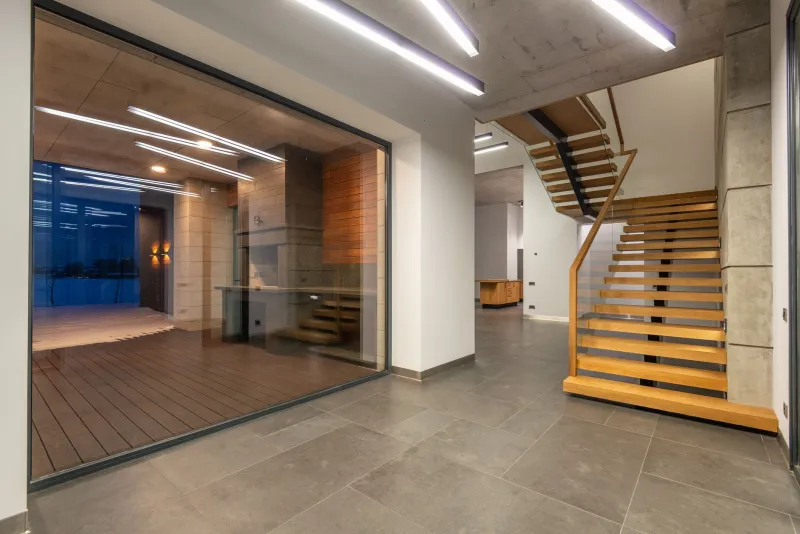
A glass-walled home at dusk, its interior illuminated by lights the resident has just chosen to raise, its temperature a reflection of a deliberate adjustment made moments ago, carries a quality of presence that no automated scene can fully replicate. The space is inhabited not merely in the physical sense, but in the fullest meaning of the word.
The technology exists to remove every last trace of domestic effort. Whether that removal constitutes an improvement is a question worth sitting with — ideally, in a room you have arranged entirely yourself.