The Pristine Burden: What No One Tells You About Owning a Minimalist Luxury Home
There is a particular irony embedded in the minimalist luxury home. Its entire philosophical premise — that fewer objects, cleaner lines, and quieter surfaces produce a more serene existence — implies a life of reduced friction. Less stuff means less to manage. Less ornamentation means less to dust. Less clutter means less chaos. The logic is seductive, and for millions of American homeowners who have invested heavily in this aesthetic, it is also, in practice, largely false.
The truth that designers rarely volunteer and real estate listings never mention is this: the minimalist luxury interior is, square foot for square foot, one of the most labor-intensive domestic environments ever conceived. Its beauty is entirely contingent on perfection, and perfection, as anyone who has attempted to sustain it will confirm, is a full-time occupation.
The Unforgiving Mathematics of Empty Space
In a maximalist interior — one layered with art, textiles, books, decorative objects, and accumulated personal history — visual noise is, paradoxically, a form of camouflage. A fingerprint on a cabinet door goes unnoticed beside a gallery wall. A water ring on a surface disappears beneath a curated arrangement of objects. Imperfection is absorbed into the richness of the whole.
The minimalist interior offers no such mercy. When a room contains a single console table, a sculptural vase, and nothing else, every deviation from immaculate becomes the focal point of the space. A smudge on a matte plaster wall is not a minor blemish — it is, effectively, the room's only visual event. A scuff on a polished concrete floor reads with the same visual weight as a painting might in another context.
"Every surface in a minimalist home is essentially on display," says one Los Angeles-based interior designer who works exclusively with high-net-worth clients. "In a maximalist space, you're curating a collection. In a minimalist space, you're maintaining a gallery. Those are two very different relationships with your home."
The distinction is not merely philosophical. It translates directly into hours, dollars, and a level of domestic vigilance that many homeowners find quietly exhausting.
Material Choices That Punish Inattention
The materials that define the luxury minimalist aesthetic — honed marble, large-format porcelain tile, brushed metal, matte lacquer, untreated oak, seamless plaster — are, almost without exception, chosen for their visual refinement rather than their practical resilience. They are extraordinarily beautiful. They are also extraordinarily demanding.
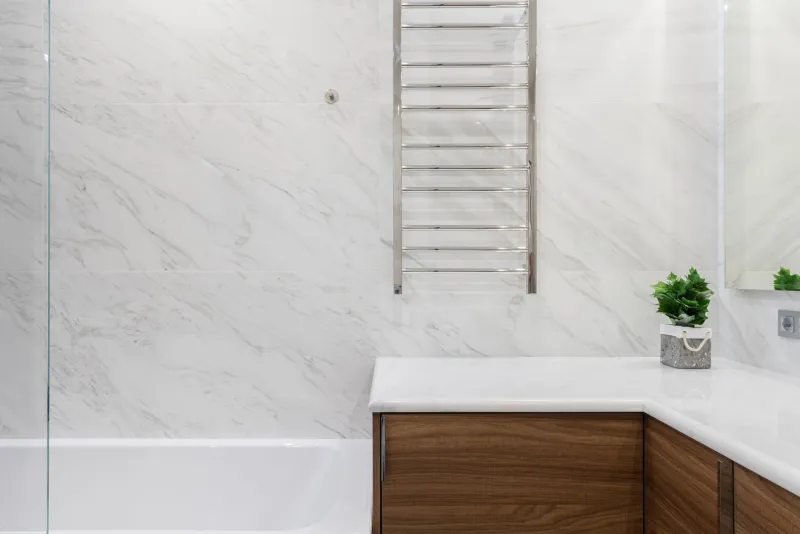
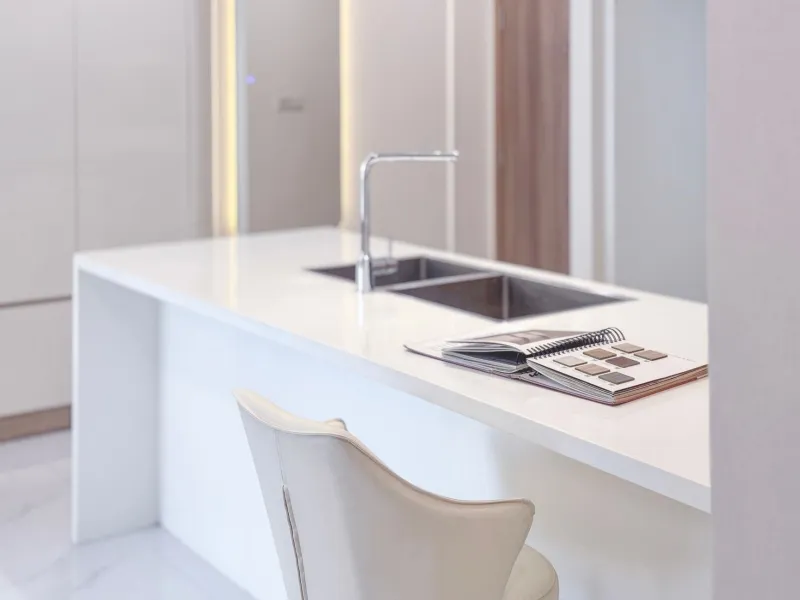
Honed marble, favored for its soft, light-absorbing finish, is notoriously susceptible to etching from acidic substances. A lemon wedge left momentarily on a kitchen countertop, a glass of sparkling water set down without a coaster — these ordinary domestic acts leave permanent marks on a surface that can cost tens of thousands of dollars to replace. Sealing protocols must be observed on a strict schedule, and even then, the material remains vulnerable in ways that its glossy, sealed counterpart is not.
Matte lacquer cabinetry, another hallmark of the restrained luxury kitchen, shows fingerprints with an almost aggressive clarity. Brushed brass and unlacquered metal fixtures develop patinas that some owners prize and others find deeply distressing, requiring either deliberate acceptance or ongoing polishing. Large-format floor tiles, with their minimal grout lines and expansive faces, reveal every particle of debris that would vanish between the smaller tiles of a more traditional installation.
"My clients fall in love with these materials in a showroom," notes a Chicago-based design consultant. "What they don't see in the showroom is what those materials look like three weeks into daily life with two children and a dog. That conversation has to happen before the contract is signed, not after."
The Hidden Labor Economy
For homeowners who can afford the minimalist luxury aesthetic, the solution to its maintenance demands is often straightforward in theory: hire more help. In practice, the equation is considerably more complex.
Housekeeping staff trained in standard domestic cleaning protocols are frequently ill-equipped to manage the specific requirements of high-specification minimalist interiors. Microfiber cloths that are appropriate for one surface can permanently damage another. Commercial cleaning products that work efficiently on conventional materials can strip protective coatings from specialty finishes. The wrong technique applied to a seamless plaster wall can leave marks that require a specialist — and sometimes the original artisan — to repair.
Several luxury homeowners interviewed for this article described a period of costly trial and error following move-in, during which well-intentioned cleaning caused inadvertent damage to surfaces that had to be professionally remediated. One homeowner in Miami recounted spending more on post-cleaning restoration in the first year of residence than she had anticipated spending on routine maintenance across five.
The result, for many owners, is the development of highly specific, property-tailored cleaning protocols — documents that run to multiple pages and specify, surface by surface, which products, tools, and techniques are permissible. Some engage specialist cleaning firms that focus exclusively on high-end residential properties, at rates that can be two to three times those of conventional housekeeping services.
Designing for Maintenance Without Sacrificing the Vision
The more experienced practitioners in the luxury residential design space have begun to address maintenance realities at the design stage, rather than leaving clients to discover them independently. This does not mean abandoning the minimalist vocabulary — it means selecting within it more strategically.
Textured plaster finishes, for instance, can provide the quiet sophistication of smooth plaster while concealing minor imperfections far more effectively. Certain engineered stone products now replicate the visual character of honed marble with substantially greater resistance to staining and etching. Integrated handles and push-to-open cabinet mechanisms eliminate the fingerprint problem on lacquer surfaces by removing the most frequently touched areas from plain sight.
"The best minimalist interiors I've designed are the ones where the maintenance burden is baked into the material selection from the beginning," says one New York designer whose portfolio includes residences across Manhattan, the Hamptons, and South Florida. "The aesthetic doesn't have to suffer. But it requires a more rigorous conversation with the client about how they actually live."
The Psychological Dimension
Beyond the physical and financial demands, there is a psychological cost to the maintenance of a pristine minimalist environment that deserves acknowledgment. The very clarity that makes these spaces so visually compelling can also make imperfection feel disproportionately significant — not merely as an aesthetic issue, but as a personal one.
Several homeowners described a heightened sensitivity to disorder that had developed over time, in which the appearance of the home had become intertwined with their own sense of control and self-presentation. A single misplaced object, a surface that needed attention, a smudge that had not yet been addressed — these minor deviations produced a level of discomfort that they recognized as disproportionate, but found difficult to modulate.
This is not a universal experience, and it is not an argument against the minimalist interior. It is, however, a dimension of ownership that the marketing of this aesthetic rarely surfaces.
The Honest Calculus
None of this is to suggest that the minimalist luxury home is a flawed aspiration. At its finest, it represents a genuinely elevated way of inhabiting space — one in which every material, proportion, and detail has been considered with care, and the result is an environment of uncommon serenity and visual intelligence.
But the serenity is not passive. It is actively produced, day after day, through a commitment of time, money, and attention that prospective owners would do well to understand before they sign. The minimalist home does not maintain itself. It simply makes the labor of maintenance invisible — which is, in the end, perhaps its most demanding design achievement of all.