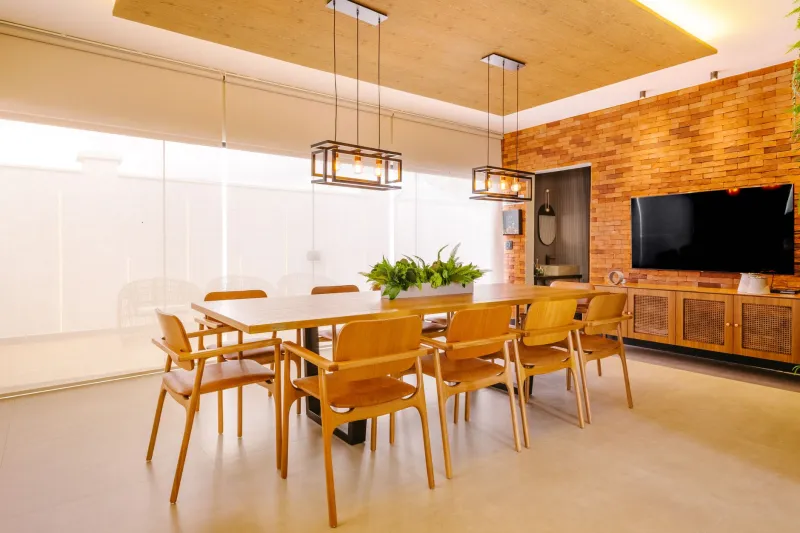
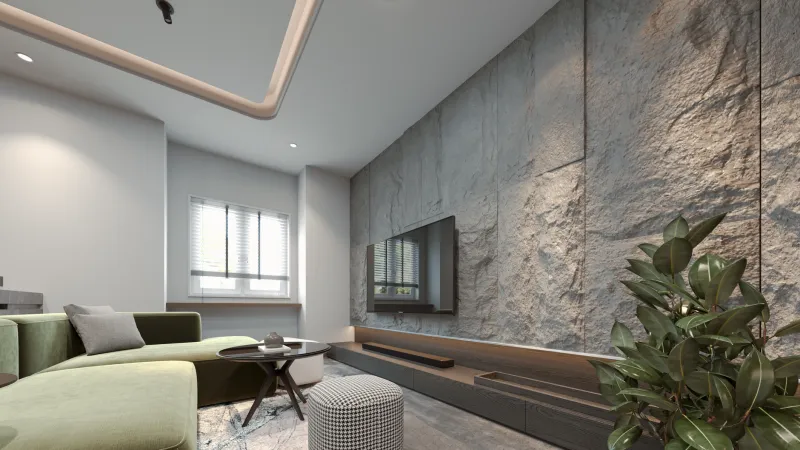
Designed to Last, Built to Date: The Hidden Fragility of the Minimalist Luxury Interior
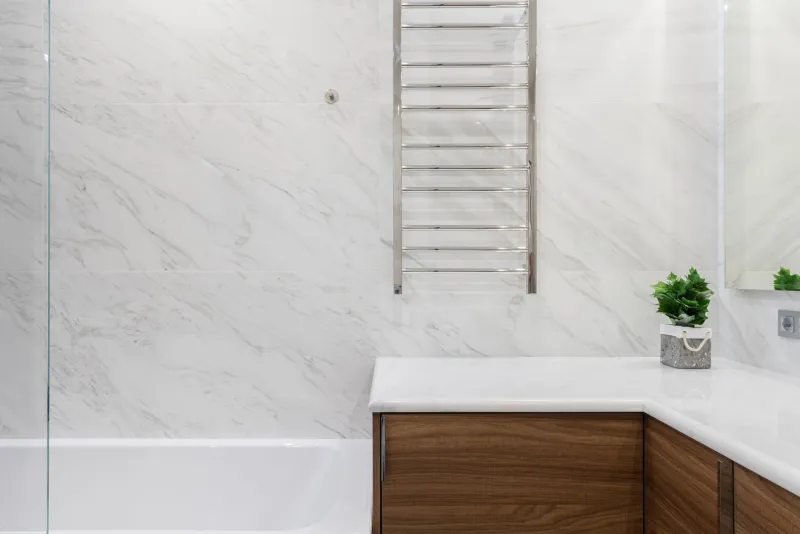
There is a particular irony embedded in the philosophy of minimalist luxury design. Its most ardent practitioners argue that stripping an interior to its essential elements — clean planes, restrained palettes, materials that speak without embellishment — produces spaces immune to the fluctuations of taste. Less, the logic goes, cannot go wrong. Yet walk through a high-end minimalist home completed in 2014 and the sensation is unmistakable: something has shifted. The space feels not merely quiet but somehow concluded, as though it belongs to a chapter that has already been written and closed.
This is the paradox that few designers discuss openly and even fewer clients anticipate when commissioning seven-figure interiors. Minimalism, for all its philosophical claims to permanence, may in fact be among the most temporally vulnerable of all design languages.
The Illusion of the Neutral Canvas
The argument for minimalism's longevity rests on a seductive premise: that a space without ornament cannot be ornamented by time. Remove the decorative excess — the pattern, the layering, the accumulation of objects — and you remove the vectors through which an interior announces its era. In theory, this is sound. In practice, it misunderstands the nature of neutrality itself.
Neutrality is not a fixed condition. It is a consensus, and like all consensuses, it shifts. The particular shade of warm greige that read as sophisticated restraint in 2012 carries a distinct timestamp today. The concrete-and-white-oak combination that defined a generation of luxury residential projects in American cities from Seattle to Miami now functions less as a timeless gesture and more as a period marker — as recognizable to the trained eye as shag carpeting or avocado-green appliances were to earlier generations.
What minimalism strips away is precisely the material that allows an interior to be reinterpreted across time. A maximalist room, dense with layered textiles, collected objects, and accumulated reference, contains within it the possibility of continuous renegotiation. Remove a piece, add another, reframe the whole. The minimalist interior, by contrast, is a closed system. Alter one element and the composition fractures. The very precision that creates its initial impact renders it brittle.
Case Studies in Costly Obsolescence
Consider the wave of ultra-minimalist residential projects completed in Los Angeles and New York between 2010 and 2016, many of which were documented in the architectural press as exemplars of enduring design. Several of these properties — some originally listed at or above ten million dollars — have since undergone significant interior renovations prior to resale, their owners quietly acknowledging that the original aesthetic had not aged as promised.
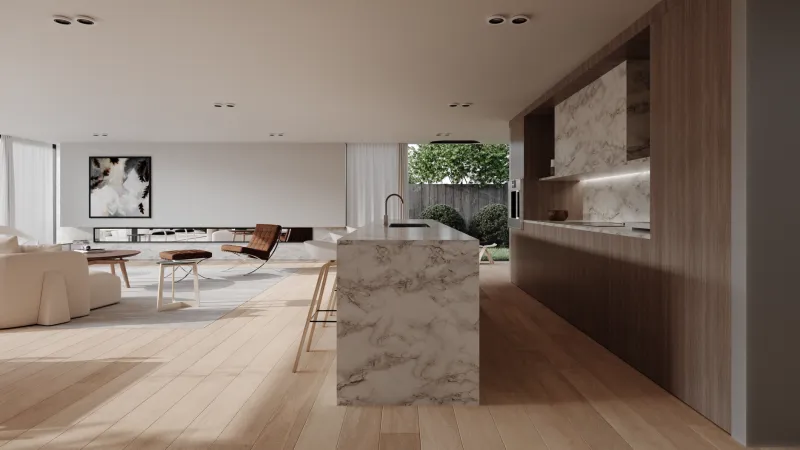
The pattern is consistent. Interiors defined by a single dominant material — polished concrete, bleached oak, honed Calacatta marble — tend to feel exhausted once that material falls from the apex of cultural preference. Unlike a layered interior that absorbs new influences through selective addition, the single-material minimalist space has nowhere to evolve. It either remains exactly as it was, increasingly conspicuous in its specificity, or it requires wholesale reinvention.
Renovation contractors working in high-end residential markets across California and the Northeast have noted a marked increase in clients seeking to soften or diversify interiors that were, by any conventional measure, recently completed and technically flawless. The complaints are remarkably uniform: the space feels cold, it feels empty in a way that no longer reads as intentional, and it no longer reflects who the owner has become.
What Timelessness Actually Requires
The homes that genuinely transcend their moment of creation share characteristics that are worth examining carefully. They are not, on close inspection, truly minimal. They are, rather, precisely calibrated — which is an entirely different quality.
A room that endures does so because it contains within it a degree of tension, a conversation between elements that remains unresolved and therefore continuously engaging. The great traditional interiors that still read as vital were never simple. They were edited, yes — ruthlessly so in the finest examples — but they retained the layering of material, the warmth of patina, and the human irregularity that allows a space to breathe across decades.
Luxury homeowners who wish to build interiors with genuine longevity would do well to resist the seduction of the singular gesture. A kitchen composed entirely of one stone, one metal finish, and one wood species is a statement — but statements, by their nature, are made in a specific moment, to a specific audience, in a specific cultural context. Once that context shifts, the statement becomes a record of its own making.
The Strategic Use of Warmth and Variation
The most forward-thinking designers working in the minimalist tradition today are, almost without exception, introducing deliberate heterogeneity into their work. Not clutter — the distinction is critical — but a considered plurality of material, temperature, and texture that provides the interior with reserves of meaning to draw upon as years pass.
Natural materials with inherent variation — stone with visible movement, timber with genuine grain character, plaster with the subtle memory of the hand — age differently than their engineered counterparts. They accumulate rather than simply endure. A slab of book-matched marble does not look the same at fifteen years as it did at installation; it looks, if anything, more itself. This is the quality that distinguishes materials chosen for their intrinsic life from those chosen for their immediate visual impact.
Lighting, too, plays a role that purely aesthetic minimalism tends to undervalue. Spaces lit with a single source — however architecturally refined — read differently as ambient light conditions shift across seasons and years. Interiors designed with multiple lighting layers, including the capacity to introduce warmth at lower intensities, retain an adaptability that flat, uniform illumination cannot provide.
Rethinking the Promise
None of this is an argument against minimalism as a design philosophy. At its most disciplined and most humane, it produces spaces of genuine power — environments that quiet the mind, clarify perception, and allow the architecture itself to become the primary experience. These are not trivial achievements.
But the luxury homeowner who invests in a minimalist interior deserves an honest accounting of what that investment actually purchases. The promise of timelessness, as it is typically delivered, is frequently a promise of a particular kind of contemporaneity — one that feels permanent precisely because it is so thoroughly of its moment. The two are not the same.
Building an interior that will remain vital, resonant, and genuinely alive a generation from now requires something more demanding than restraint. It requires the kind of considered complexity that only becomes visible over time — the slow revelation of a space that was designed not merely to impress upon arrival, but to reward the long occupation.