The Abundance Imperative: Why Silicon Valley's Elite Are Filling Their Homes Again
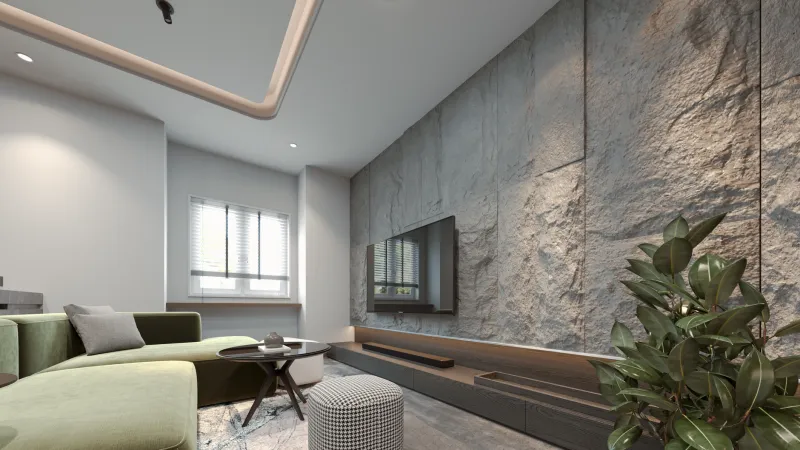
For the better part of fifteen years, the minimalist interior served as the unofficial uniform of American affluence. Bare concrete floors, single-stem vases, furniture that floated like punctuation marks in vast, undivided space — these were the signifiers of taste among those who could afford to signal it most loudly. To own less, visibly and deliberately, was to communicate everything.
That consensus is fracturing.
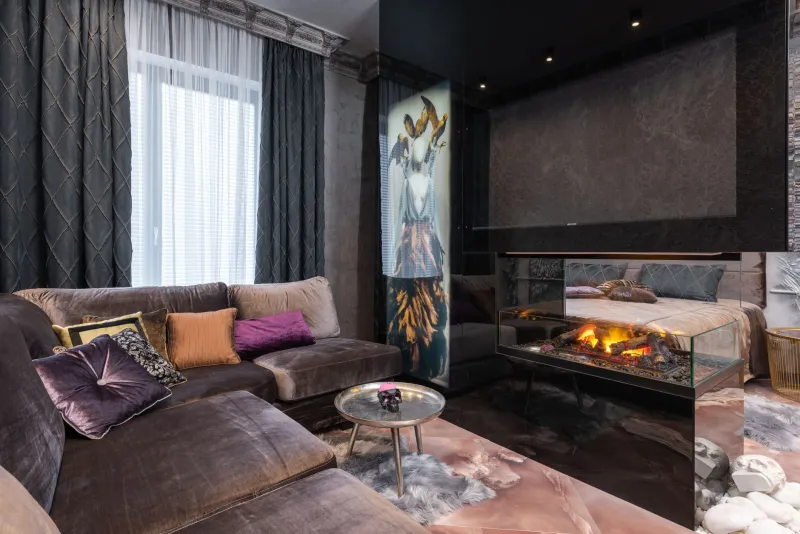
In Atherton, Hillsborough, and the quieter hillside enclaves of Los Altos Hills, a different kind of home is taking shape. Walls are being claimed by art — not one carefully chosen canvas, but entire curated collections arranged floor to ceiling. Bookshelves have returned, dense with spines and stacked with intention. Antique objects share surfaces with contemporary ceramics. Layered rugs anchor rooms that were once left deliberately bare. The effect is not chaotic. It is, in the parlance of the designers now executing these spaces, intentionally abundant.
The Psychological Reckoning
The shift did not emerge from a trend cycle. It emerged from lived experience.
Several prominent San Francisco Bay Area interior designers report that their highest-net-worth clients — many of them founders, investors, and executives who built fortunes on the logic of optimization — began questioning their interiors around 2021 and 2022. The extended period of time spent inside one's home during the pandemic years had a clarifying effect. Spaces that had been designed to impress visitors revealed themselves, under prolonged daily exposure, to feel emotionally thin.
"There's a specific kind of fatigue that sets in when your environment gives you nothing to discover," says one San Francisco-based luxury designer who has worked with clients in the nine-figure net-worth range. "My clients were surrounded by beautiful objects — or the deliberate absence of them — and they were lonely inside their own homes. That's not a small thing to reckon with."
The loneliness these clients described was not social in the conventional sense. It was environmental. The minimalist interior, at its most rigorous, offers the eye very little to rest upon, very little to explore, and almost nothing to remember. For individuals accustomed to high cognitive stimulation across every dimension of their professional lives, that blankness eventually registered not as calm but as deprivation.
What the Research Suggests
Neuroscientists who study the relationship between built environments and human cognition have long understood that the brain does not experience visual simplicity as neutral. The human perceptual system evolved in environments of extraordinary complexity — layered landscapes, varied textures, abundant visual information. Spaces that replicate some measure of that richness tend to support what researchers describe as restorative attention, a mode of effortless, pleasurable engagement that replenishes the focused attention depleted by demanding cognitive work.
Dr. Colin Ellsworth, a cognitive neuroscientist at Stanford whose research touches on environmental psychology, notes that the relationship between visual complexity and well-being is not linear. "There's a meaningful distinction between chaotic visual environments, which are genuinely stressful, and rich visual environments, which can be deeply nourishing," he explains. "The key variable is coherence. When complexity is organized by a governing aesthetic logic — a collector's sensibility, a consistent palette, a clear hierarchy of objects — the brain reads it as meaningful rather than overwhelming."
This distinction is precisely what separates the new maximalism from the cluttered interiors it superficially resembles. The homes being designed for Silicon Valley's most discerning clients are not accumulations of possessions. They are curated environments in which every object has been selected for its relationship to a larger whole.
The Collector's Interior
The most telling marker of this trend is the return of the personal library. In a cohort of homeowners who have spent careers building digital products and immaterial wealth, the physical book has re-emerged as a profound statement of identity. Several designers describe clients who have commissioned custom millwork specifically to house collections that had been kept in storage for years — not because the owners lacked space, but because minimalism had made books feel aesthetically inconvenient.
"Books do something no other object does," observes one Los Angeles-based designer now working on multiple Bay Area projects. "They tell a story about who you are and what you've cared about across time. A great library is essentially a portrait of a mind. My clients want that portrait back on the wall."
Art acquisition has followed a similar trajectory. Rather than the single commanding work positioned as a focal point in an otherwise empty room — a composition that reads more as gallery than home — collectors are now choosing installation approaches that create visual conversation between pieces. Works from different periods, different media, and different geographies are arranged in deliberate proximity, generating the kind of interpretive richness that rewards sustained looking.
Ceramics, sculptural objects, travel artifacts, and inherited pieces are also returning to surfaces. The styling philosophy that once demanded every tabletop be bare is giving way to one that asks instead: what does this object mean, and does it belong here?
Intentional Abundance Versus Mere Accumulation
The designers shaping this movement are careful to distinguish their work from any simple reversal of minimalist principles. The goal is not to fill space for the sake of filling it. The goal is to construct an environment that reflects the full complexity of the person who inhabits it.
"Minimalism, at its best, was about removing the inessential," says one New York designer who relocated to the Bay Area to serve a growing roster of tech-industry clients. "What we're doing now is asking a harder question: what is essential to this specific person? And the answer, almost always, is richer and stranger and more particular than a white room allows."
This philosophy — intentional abundance — demands the same discipline as minimalism, but applies it differently. Rather than editing down to a single perfect object, the designer must construct a system in which many objects coexist with coherence. The palette must hold. The scale relationships must be deliberate. The negative space that remains must feel considered rather than accidental.
The result, when executed well, is an interior that functions as a kind of autobiography — a space that holds its owner's history, curiosities, and commitments in visible, tangible form.
What This Means for the Luxury Market
For those tracking the evolution of the high-end residential market, the implications of this shift are significant. The ultra-luxury interior has always been a leading indicator of broader design culture, and the movement away from ascetic restraint among the wealthiest American homeowners suggests that the minimalist consensus is approaching the end of its dominant cycle.
This does not mean minimalism is disappearing. The principles of spatial clarity, material quality, and deliberate composition that underpin the best minimalist design will continue to inform luxury interiors at every level. What is changing is the hierarchy of values — the weight assigned to visual richness, personal narrative, and emotional warmth relative to formal purity.
For homeowners navigating this shift, the most important question is not whether to add or subtract, but what their home is being asked to do. A space designed to project a certain image serves a different purpose than one designed to sustain a life. Silicon Valley's most successful residents, it seems, are increasingly interested in the latter.