The Entertaining Trap: How Architecturally Flawless Homes Are Making Hosts Feel Profoundly Alone
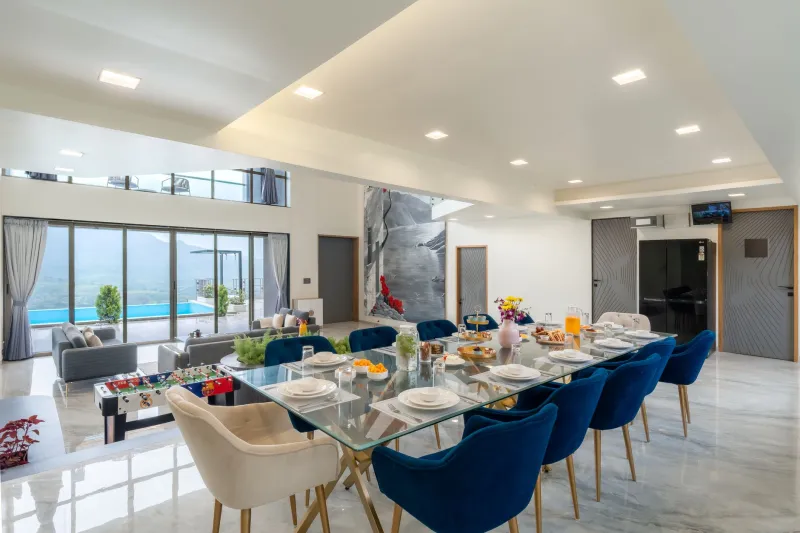
There is a particular species of dread that descends on certain luxury homeowners approximately forty minutes before their guests arrive. The caterers are positioned. The lighting scene has been dialed in. The seamless glass walls have been polished to invisibility, and the curated terrace — an extension of the interior that cost more per square foot than most Americans' entire homes — glows in the early evening. Everything is, by any objective measure, perfect.
And yet, the host feels utterly alone.
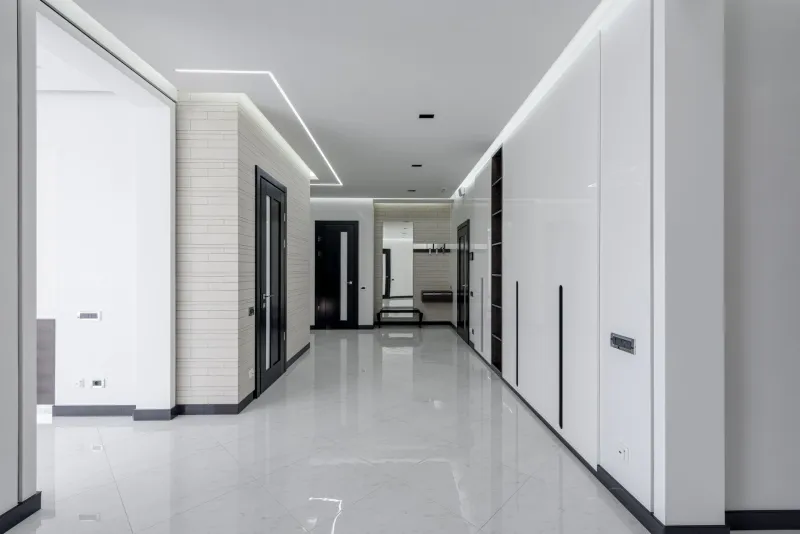
This is not a crisis of hospitality. It is, increasingly, a crisis of design — one that the luxury residential market has been reluctant to examine with candor. The same architectural principles that have defined aspirational entertaining spaces for the past two decades: the unbroken open plan, the glass-to-landscape continuity, the rigorously minimalist interior — are generating environments that, for all their social promise, quietly undermine the very connection they were built to celebrate.
The Stage That Swallows Its Actors
Architects and interior designers have long understood that the open floor plan democratizes a gathering. Remove the walls, and the host is no longer sequestered in a kitchen while conversation flows elsewhere. The logic is sound, and the aesthetic is undeniably compelling. But what the theory underestimates is the psychological cost of total exposure.
"When there are no thresholds, there is nowhere to retreat," observes one New York-based residential architect who has designed extensively across the Hamptons and Miami's waterfront neighborhoods. "The host becomes a permanent subject of the room. Every movement, every expression, every moment of distraction is visible to everyone, simultaneously. That is not a social environment. That is a performance."
Environmental psychologists have a name for the discomfort that emerges from this condition: social surveillance anxiety. In spaces where sightlines are unbroken and acoustic separation is nonexistent, individuals become acutely conscious of being watched. For guests, this awareness is intermittent. For the host — who is also managing the logistics of the evening — it is relentless.
The minimalist interior compounds the effect. Without the visual complexity of layered furnishings, art, and architectural ornament, there is little for the eye to settle on. Guests, consciously or not, default to watching the people in the room. The host, stationed at the island kitchen that was specifically designed to place them at the social center, finds themselves under a gaze they cannot escape.
The Dissolution of the Threshold
The blurring of interior and exterior boundaries — one of the defining gestures of contemporary luxury architecture — introduces a second, less obvious tension. Pocket doors that retract entirely, frameless glass walls that open to the terrace, and living spaces that spill into landscaped gardens are among the most photographed features in high-end residential design. They are also, according to several homeowners interviewed for this article, among the most socially disorienting.
"I spent two years designing a home in Malibu that was essentially engineered for entertaining," says one technology executive who requested anonymity. "The indoor-outdoor flow was extraordinary. But when I have people over, I spend the entire evening anxious about where the gathering is. Half the guests migrate outside, half stay in. The conversation fragments. I'm constantly moving between two spaces trying to be present in both, and I'm present in neither."
This fragmentation is not incidental. It is, in a meaningful sense, architectural. When a space offers no natural hierarchy — no room that reads as the center of gravity — gatherings lose their coherence. The host, whose role is partly to orchestrate the social energy of an evening, finds that the space actively resists orchestration.
Traditional residential architecture understood this intuitively. The formal dining room, the drawing room, the library — these were not merely stylistic conventions. They were containers for specific kinds of social experience. Each threshold crossed signaled a shift in register. The guest understood, without being told, that dinner was a different kind of moment than cocktails, which was a different kind of moment than coffee afterward. The architecture did the social work.
The open plan, in eliminating those thresholds, also eliminates those signals. The result is a gathering that can feel curiously shapeless — abundant in square footage and visual drama, but lacking the structure that allows intimacy to form.
Perfection as Obstacle
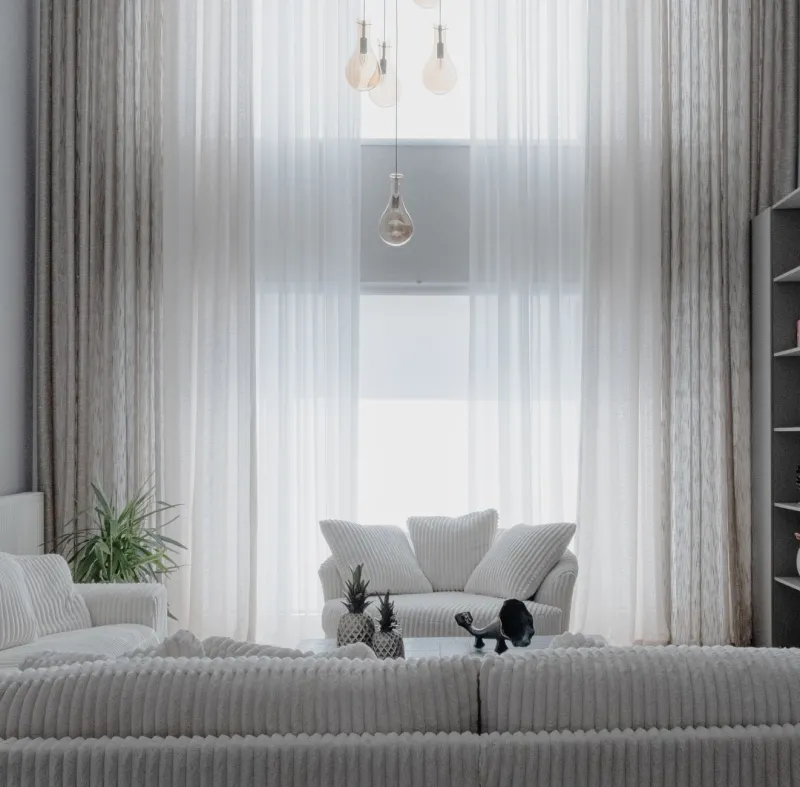
There is a subtler dynamic at work as well, one that touches on the psychology of perfectionism. The luxury entertaining home — with its bespoke finishes, its calibrated lighting, its surfaces that demand reverence — communicates, however unintentionally, that it must not be disturbed. Guests sense this. They hold their wine glasses more carefully. They hesitate before settling fully into a chair. The home's beauty becomes a form of social instruction, and that instruction is: be careful here.
Hospitality, at its most fundamental, requires the opposite. It requires guests to feel that they may relax entirely, that the space welcomes their presence rather than merely tolerating it. The most beloved entertaining homes in American residential history — think of the rambling farmhouses of the Hudson Valley, or the layered interiors of storied Charleston townhouses — were rarely the most architecturally pristine. They were the most forgiving.
"There is a reason people remember certain houses their whole lives," notes one Los Angeles-based interior designer with two decades of experience in high-net-worth residential projects. "It's almost never because the house was perfect. It's because the house felt generous. There's a quality of welcome that minimalism, by its very nature, struggles to convey."
Designing for Connection, Not Contemplation
The architectural community is beginning, if cautiously, to reckon with these tensions. A number of designers are now reintroducing what might be called social topography into luxury entertaining spaces: subtle variations in ceiling height that define zones without walls, furniture arrangements that create conversational enclosures within larger open plans, and the strategic deployment of texture and warmth to soften the visual severity of minimalist interiors.
Others are advocating for what one architect describes as "the purposeful threshold" — a moment of transition between spaces that is neither a full wall nor a fully dissolved boundary, but something in between. A change in flooring material. A dropped soffit. A freestanding sculptural element that reads, spatially, as a room divider without functioning as one. These are small gestures, but they carry significant social weight.
The goal, in each case, is the same: to create a home that serves its occupants during the act of gathering, rather than one that simply documents their taste.
The Loneliness at the Center of the Frame
For the homeowners caught in this paradox, the realization tends to arrive not during the planning of an event, but in its aftermath. The evening was beautiful. The photographs, inevitably, were stunning. And yet something was missing — some quality of ease, of warmth, of genuine presence that the architecture, for all its excellence, could not manufacture.
That quality has a name, even if it resists precise definition. It is the feeling of being, together, at home. And it turns out that designing for it requires considerably more than designing for the impression of it — a distinction that the most discerning clients, and the most honest architects, are only now beginning to fully appreciate.